3.4.4.3 Network integration, EAP-TTLS security mode

About EAP-TTLS

EAP-TTLS (Tunneled Transport Layer Security) is an EAP implementation by Juniper networks. It is designed to provide authentication that is as strong as EAP-TLS, but it does not require each user to be issued a certificate. Instead, only the authentication servers are issued certificates. User authentication is performed by password, but the password credentials are transported in a securely encrypted tunnel established based upon the server certificates.

User authentication is performed against the same security database that is already in use on the corporate LAN: for example, SQL or LDAP databases, or token systems. Since EAP-TTLS is usually implemented in corporate environments without a client certificate we have not included support for this. If you prefer using client certificates per user we suggest using EAP-TLS.
Start up of the EAP-TTLS
  1. Select the radio button next to EAP-TTLS and click Next.

    The EAP-TTLS mode window opens.

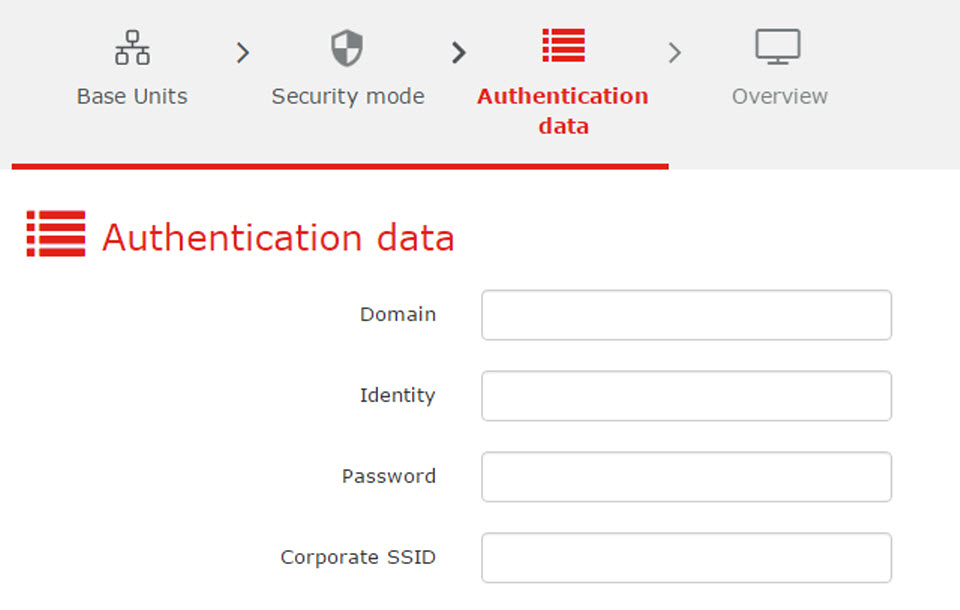
    Image 3–55 EAP-TTLS

    Necessary Data to continue:

    DomainThe company domain for which you are enrolling, should match with the one defined in your Active Directory.
    IdentityIdentity of the user account in the Active Directory which will be used by the ClickShare Buttons to connect to the corporate network.
    PasswordThe corresponding password for the identity that you are using to authenticate on the corporate network. Per Base Unit each Button will use the same identity and password to connect to the corporate network.
    Corporate SSIDThe SSID of your corporate wireless infrastructure to which the ClickShare Buttons will connect.
  2. Click Next to continue.

    The Overview window is displayed.

  3. Click Finish.

    When having problems connecting the Button to your corporate network, to get feedback from the Button please have a look at the ClickShare Client log. This log can be enabled by holding shift when starting the Client executable. Look for the lines “EDSUSBDongleConnection::mpParseDongleMessages”. An error code and a short summary of the issue should be logged.