4.5 Tri-Combo input card

General

This card provides one 20-pin DisplayPort connector, supporting DisplayPort video signal; one 19-pin HDMI connector, supporting an HDMI video signal; and 4 BNC connectors, supporting Single Link, Dual Link, and Quad Link signals, in SD, HD, 3G, 6G, and 12G SDI formats.

The figure below illustrates the tri-combo input card’s rear panel connectors:
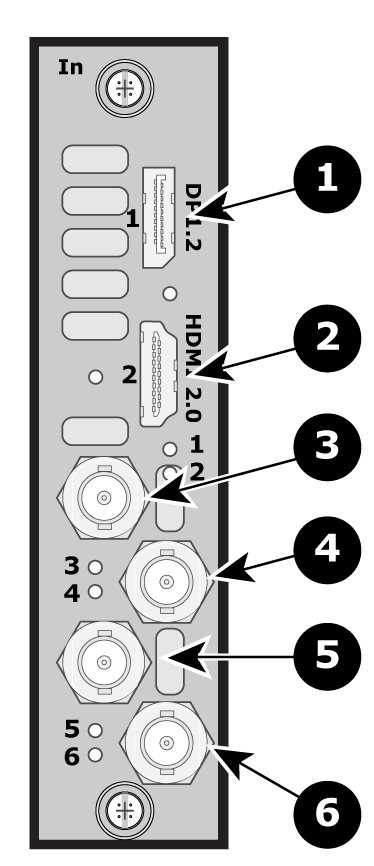
Image 4–7 Tri-Combo Input Card Rear Panel
1DP connector — with an LED that turns on green when a valid sync has been detected
2HDMI connector — with an LED that turns on green when a valid sync has been detected
3BNC connector — SDI 1 with an LED that turns on green when a valid sync has been detected
4BNC connector — SDI 2 with an LED that turns on green when a valid sync has been detected
5BNC connector — SDI 3 with an LED that turns on green when a valid sync has been detected
6BNC connector — SDI 4 with an LED that turns on green when a valid sync has been detected
Features
Specifications

DisplayPort

HDMI

SDI

DisplayPort
Digital display interface developed by the Video Electronics Standards Association (VESA). This interface is primarily used to connect a video source to a display device such as a computer monitor, though it can also be used to transmit audio, USB, and other forms of data.
HDMI
High-Definition Multimedia Interface (HDMI) is a compact audio / video interface for transferring uncompressed video data and compressed / uncompressed digital audio data from an HDMI-compliant device, the source device, to a compatible computer monitor, video projector, digital television, or digital audio device. HDMI is a digital replacement for existing analog video standards.
SDI
Serial Digital Interface (SDI) is a serial link standardized by the Society of Motion Picture and Television Engineers (SMPTE). SDI transmits uncompressed digital video over a 75-ohm coaxial cable, typically within studios, and is seen as the most professional video infrastructure equipment.