We’ve strengthened our foundations over the past years, and that resilience is now translating into renewed momentum.
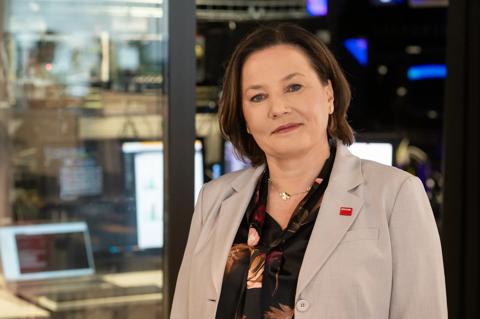
Interview with our CEO
2025 marked a turning point for Barco. After a challenging 2024, we navigated another year of high volatility with resilience and focus. While new headwinds emerged, we were able to stabilize our position and get back to growth - modest, yet significant in light of the circumstances. This progress reflects the strength of our foundations and the agility we’ve built into our organization.
Success and headwinds
Did 2025 bring a new sense of stability for Barco?
An: When looking at our environment, 2025 was not a return to calm. We dealt with trade tariffs and the weaker dollar impacted our margins. But indeed, we’ve regained stability and could capitalize on pockets of growth. Over the past four years, we’ve cleared a series of hurdles while significantly strengthening our foundations. Despite the headwinds, we maintained our solid cash position and we remained firmly committed to our strategy: greater customer focus in our businesses, building a global manufacturing footprint, and fostering a culture of innovation. This has resulted in a solid portfolio with groundbreaking new products. In 2025, we saw all these efforts starting to pay off.
We saw progress in several markets. Our US market share increased, and EMEA returned to growth after a difficult 2024. Entertainment performed particularly well. While not back to pre-covid levels, the recovery is real and promising.
So yes, 2025 was challenging, but it proved that we can keep moving forward even in tough conditions.
The US tariffs were a big topic in 2025. How did Barco deal with that shock?
An: The tariffs forced us to react quickly on several fronts.
Most importantly, our focused factories allowed us to shift manufacturing for the US market from China to Belgium and Italy when it made sense, which softened the impact. We also optimized logistics routes and rethought parts of our supply chain. Where necessary, we raised prices to compensate for the tariffs. Fortunately, the market understands that reality.
It’s important to note that everyone in our industry is facing the same constraints in the US. None of our competitors manufacture there either, so we are competing on equal footing. In some cases we even have an advantage because our manufacturing footprint is so flexible.
Was the China investment still the right call given today’s geopolitical situation?
An: Absolutely. China fulfills two critical roles: cost-efficient manufacturing and direct access to a large, important market. China still has a strong supplier ecosystem, and it remains relatively easy to find skilled talent there
So China remains an important part of our strategy, but within a broader and adaptable network of focused factories. Depending on how trade conditions evolve, we can shift production between China, Belgium and Italy to ensure efficiency and resilience.
Our focused factories give us the flexibility to shift production quickly when conditions change. That agility is a real competitive advantage.
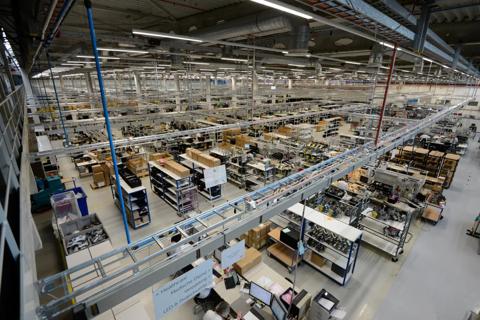
Our focused factories give us the flexibility to shift production quickly when conditions change. That agility is a real competitive advantage.
An: For now, there are a few constraints. Because the local supplier ecosystem is limited, we’d need to import many components, and skilled labor in the US is relatively scarce and expensive. At this stage, the case is not strong enough, but we will keep assessing it.
Speaking of the US, the weaker dollar was another headwind for Barco in 2025. While we grew significantly in underlying demand, part of that growth evaporates when you convert sales into euros. Fortunately, we do have a natural hedge, because a substantial part of our component purchases and other costs is in US dollars as well. But still, there is a material impact.
Innovation as a growth driver
You mentioned a strong pipeline of new solutions. What were the highlights?
An: In Enterprise, I am particularly happy with the new ClickShare Hub that we introduced in December. The hybrid meeting room market is a competitive space. In the coming years, growth is mainly expected in the in-room system segment. While in the past, ClickShare was always offered as a BYOD solution, we're now extending our range with an in-room system: the ClickShare Hub, which has been built on Microsoft’s Device Ecosystem Platform. We believe it can open new doors for us, while our customers globally will gain even more flexibility in their meeting rooms.
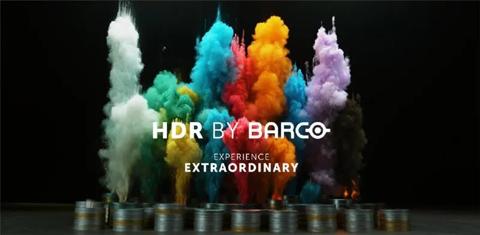
HDR by Barco is more than image quality. It’s a strategic innovation that redefines premium cinema and drives recurring growth.
The strongest momentum of 2025, though, was in Entertainment. Both our Immersive Experience and Cinema businesses performed very well. The new Encore 3 event control platform, for one, quickly became a showpiece in our portfolio. Cinema saw a very robust replacement cycle for laser projection, but most importantly, the enthusiasm for our HDR Lightsteering technology is exceptional. We received more than 150 orders for HDR by Barco in its first year on the market. And we should look beyond the technology itself. This is just the start of building a new premium cinema experience.
You say we should “look beyond the HDR technology". What do you mean by that?
An: HDR by Barco is strategic. First, it’s revolutionary technology that allows exhibitors to create a premium experience for their audiences, which is essential for them to stay in business. Just as important, it’s not just a one-off hardware sale. HDR by Barco comes with an innovative business model with recurring revenue, both from the systems and their use and from the software and tools we provide to grading and coloring studios.
These high-value activities deepen our relationships across the value chain, from exhibitors to the studios. Over time, HDR by Barco will be a significant driver of both growth and profitability.
That software angle seems important. Barco kicked off the shift to software some years ago. How is that progressing for other solutions?
An: We’re advancing well, and we still see significant room to grow. Today, about half of our engineers are software engineers. That says a lot about how the company has evolved.
In Control Rooms for instance, our CRTL platform shows this evolution very clearly. Hardware is no longer the core: Barco CTRL is a software-led solution that manages complex workflows. Beyond this transition to software, security is becoming increasingly critical in today’s geopolitical context. Our customers rely on Barco CTRL not only for operational efficiency but also for robust, secure environments that protect sensitive data and ensure continuity in mission-critical operations. Across Barco, we see the same pattern: more software, more connectivity, more focus on workflows, and gradually more recurring revenue from services and licenses.
Our ecolabeled portfolio proves sustainability is real progress, not ticking boxes.
Also Healthcare puts increasing emphasis on software-defined solutions. What milestones stood out for you in 2025?
An: Yes, also in Healthcare we delivered important progress on our software roadmap. In the market of mid-segment and ambulant operating rooms, we are introducing NexxisCube, which is designed to simplify workflows and reduce integration complexity. At the same time, our new 3D visualization solutions and SlideRightQA pathology quality management software are highly aligned with our long-term strategy: shifting from hardware-centric modalities to intelligent, software-enabled ecosystems that help clinicians work faster, safer and with greater diagnostic confidence.”
Building for the long term
Sustainability has been a priority for Barco for years. What tangible progress did you make in 2025?
An: The most important step is that our science-based climate targets are now fully translated into concrete goals for 2030. They’re ambitious, and they’re built into our investment and product roadmaps. We’ve also committed to carbon-neutrality by 2050. If we want to remain relevant, we have to think in these long time frames.
By the end of 2025, about three quarters of our sales came from products with an ecolabel. That reflects real improvements in energy consumption, material choices, and design. Let me highlight that this isn’t just about compliance or ticking boxes, it’s also about differentiation. Our ecolabeled solutions deliver real added value to our customers: they help clients like cinema chains to drastically reduce their energy consumption. For us, sustainability also remains a differentiator to attract talent.
Speaking of talent, what changed on the people side in 2025?
An: One of the key changes is that we’ve linked our cultural values more clearly to concrete behaviours in 2025. That makes it easier for our people to understand what we stand for in daily decisions. As a global company Barco is always looking for talent, and a common culture matters. Our new Chief HR Officer Lien brings fresh perspectives and energy to that work.
A shared culture helps our global teams move faster and stay aligned.
Financial strength and capital allocation
Barco has been maintaining a solid cash position for years. Did you take steps to deploy that capital?
An: Our solid cash flows and healthy balance sheet primarily give us the flexibility to keep investing in our own innovation, our factories and our people. At the same time, we continue to look at targeted acquisitions. We’re interested in companies that bring synergies, either in technology, in growing market share in existing markets or in access to new markets, and that are profitable and create value. I know we’ve been talking about this for a while, but these things take time. We’re actively exploring opportunities, but we remain rigorous in our selection process. At the same time, we want to return cash to our shareholders in a disciplined way. So alongside our steadily growing dividend, we initiated two share buybacks in 2025.
Looking ahead
Looking to the coming one to three years, what’s next for Barco?
An: In the coming years, it’s about scaling, improving, and fully capturing the benefits. We see growth opportunities in several areas. Especially In Entertainment, we expect further growth in cinema and in mid-range segments like theme parks and other venues. Across all our divisions, software and connectivity are becoming central. And as we demonstrated at our Capital Markets Day in October, we’re bringing more AI into workflows to help customers manage complexity and make faster decisions. We’ll continue building recurring revenue from software and services.
Recurring revenue is strategically important for Barco. It makes our performance more predictable and stabilizes revenue streams. Moreover, it deepens customer loyalty, as these new business models foster long-term partnerships rather than oneoff transactions. Of course, growing that revenue requires patience and may temper short-term growth, but the long-term benefits, like profitability, resilience, and customer stickiness, justify the investment.

Looking ahead to 2026, I'm strengthened by what 2025 has taught us. The past year has shown that Barco has the resilience to handle today’s volatile reality. Across the company, teams are operating with a strength that gives me the confidence that we can grow again and keep creating value, not only for our customers, our business partners, and our shareholders but also with them. I am genuinely grateful for the commitment and the loyalty that every employee and every other stakeholder has shown us over the past year.