文章 · 3 分钟阅读 · 2026年6月4日
4 分钟阅读

Most critical infrastructure gets a second chance. A power grid that experiences a brief outage can recover, adjust, and keep serving customers the next day. A financial system that goes down overnight can reconcile and resume trading in the morning. An election operations center does not get that luxury. There is no rescheduling election night, and there is no quiet period to fix a problem before anyone notices.
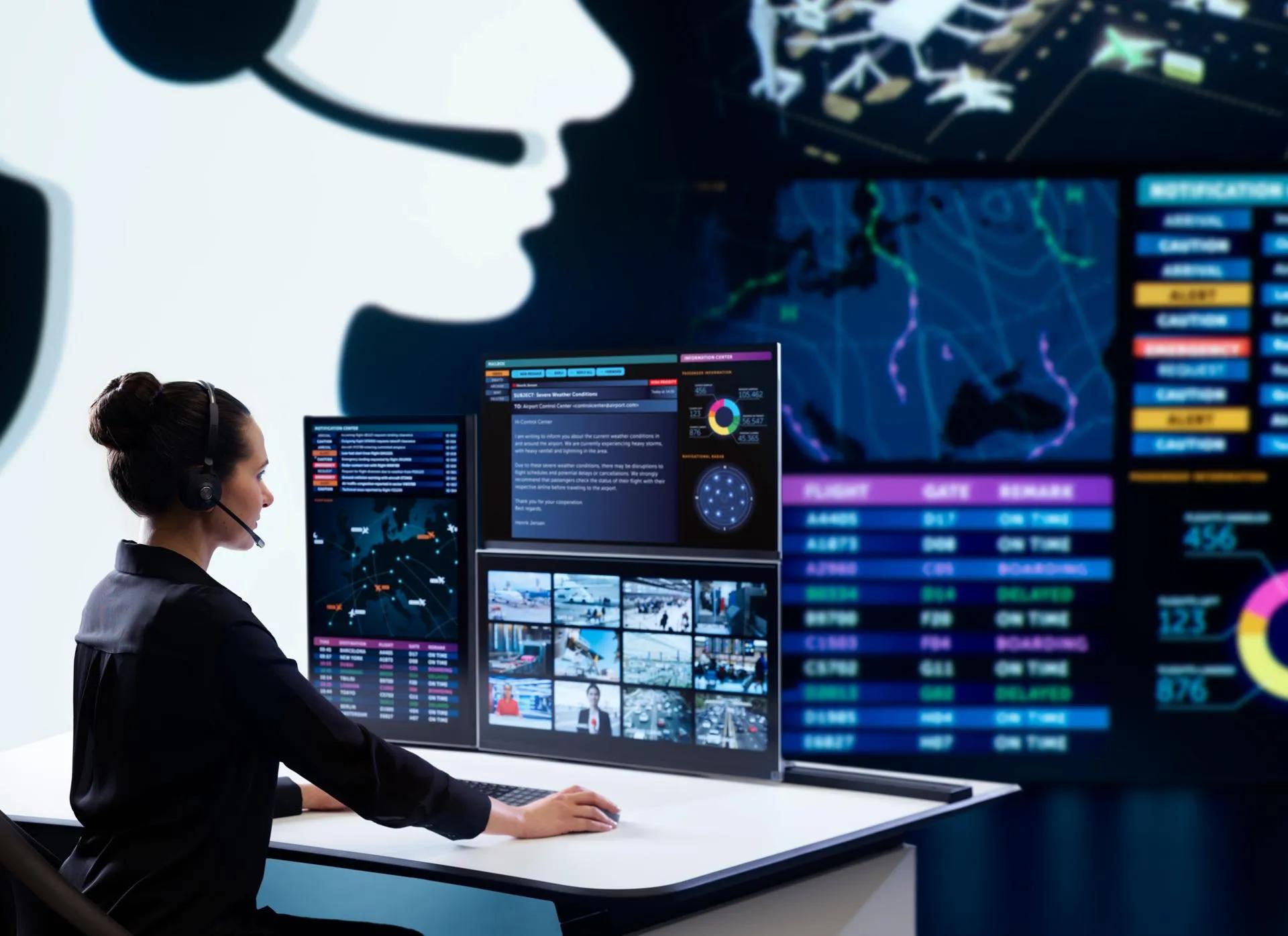
That single fact changes how security should be thought about in this environment. Uptime and security are usually discussed as separate concerns: one belongs to the IT team, the other to the Operations team. In an election operations center, they are the same conversation. It is the reality Barco CTRL, the KVM over IT solution for control rooms, was built for, and this article looks at how it keeps election operations centers running when it matters most.
Consider what happens when a results system goes dark, even briefly, on election night. Coordinators lose visibility into incoming data. Media partners waiting on updates notice the gap immediately. And in an environment where public confidence in the process is already scrutinized from every angle, a visible outage does not read as a routine technical hiccup. It reads as a question mark over the integrity of the count, whether or not that is a fair characterization.
That is why an outage in this setting is not purely an IT problem to route to a help desk. It is a public trust event, and it needs to be treated with the same seriousness as any other security incident. A system that stays up is one of the ways an election operations center protects the credibility of the process it supports.

Here is how Barco CTRL puts that into practice. Redundancy is designed into the platform at the hardware level. If a server component fails, a redundant server takes over automatically, without the staff needing to intervene or even necessarily notice. That kind of failover matters most at the exact moment it would otherwise be least convenient, in the middle of an active operation with no room for a maintenance window.
The same principle carries through to the software. Services on the server run in isolated containers, so if one service malfunctions, it does not take the rest of the system down with it. The same isolation logic applies at the decoder level: a single problematic source cannot knock out the entire hardware device it is connected to. A network link acting up at one polling location should never be able to take out visibility into all the others.
Keeping the system current is just as painless. Updates roll out system-wide from a central location and take about as long as a coffee break, so there are no long update cycles and no overnight maintenance windows. Because an update is no hassle, teams tend to install it right away instead of putting it off, which keeps everything running smoothly, even on election day itself.
None of this replaces the fundamentals: encrypted communications, zero-trust access, and continuous audit logging still matter as much as ever. But in an environment where there genuinely is no day two, resilience against failure deserves to sit alongside those fundamentals rather than underneath them. A system that authenticates every user perfectly but goes dark at the wrong moment has still failed the room it was meant to protect.
Election operations centers do not get to reschedule. The technology running them should be built with that constraint front and center, not as an afterthought to the security checklist.
An election operations center has one big day, but the room does not have to sit idle for the rest of the calendar. Barco CTRL is built around just one type of encoder, one type of decoder, and one type of server, so the same hardware can be redeployed as needs change. The same decoder can drive an operator desk or a video wall, and new sources or operator positions are added by simply adding devices to the network.
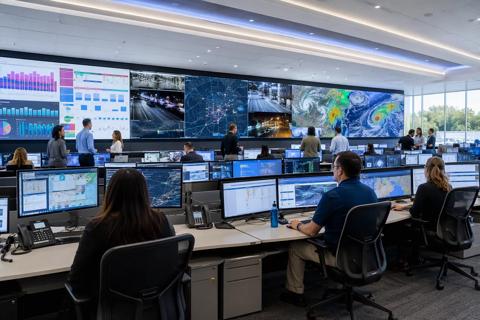
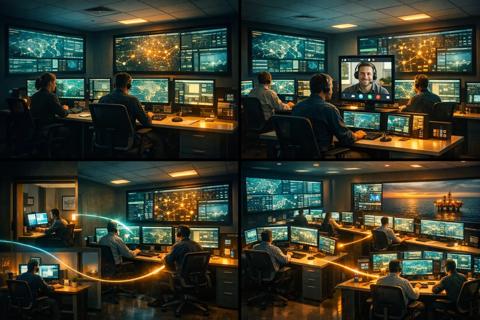
That flexibility gives the room a second life. Between elections, it can work as a security operations center for a local or state government. It can become a crisis center for public services, bringing agencies together around shared information during a storm, a public health emergency, or any other incident. It can also take on whatever other control room needs a government has. Staff keeps the same interface throughout, so nobody needs retraining when the room changes purpose, and the same zero-trust security, audit logging, and redundancy apply to every use.
For election offices working with constrained budgets, that means one investment that works all year round, instead of a room that lights up once every election cycle.
Curious how Barco CTRL keeps election operations centers running when it matters most? Request a demo at barco.com/ctrl-demo.