We call our innovation projects 'seed-grow' projects. You plant a seed, give it the right conditions, and eventually you reap the fruit.
“Create a safe space to try new things”: how Barco accelerates innovation
Innovation · 6 min de lecture
Innovate faster, with more disruptive ideas: that became a real focus when Barco’s new CEOs revamped the strategy in 2021. Four years later, the approach is clearly paying off. We spoke with three people who have been close to that innovation journey: Peru Dharanipathy, Head of Barco Labs, Tom Kimpe, Innovation Lead Healthcare, and Steven Delputte, Technical Director.
Barco made a very conscious decision to change how innovation works. Why was that?
Peru: “We’ve always had strong technology, talented people and a heart for innovation. Still, our pipeline was filled mainly with incremental innovation, based on existing solutions. To ensure sustainable growth, a company needs disruptive innovation. But that’s hard to embed in a classic business model where it has to compete with short-term priorities. So, we needed to create the right conditions for new ideas to grow.”
How did you make that happen?
Peru: “We put an innovation process in place, an internal venturing model. Ideas start like seeds at Barco Labs. If they show potential, they move into incubation, where teams get more time, budget, and focus. Only when value becomes tangible do they graduate into a business unit, which takes it from there and embeds it in the product offering.”
Tom: “In Barco Labs we focus on new product categories, new business models, sometimes even new markets. In that sense, we literally create new growth streams. To do that in a disciplined way, we made innovation a repeatable process with clear governance. Three times a year, teams present their ideas, progress, risks, and learnings to the Innovation Board, which Peru oversees, together with our CEO. Actually, ‘presenting’ is not quite the right word. They really pitch the project with a value proposition, go-to-market strategy, pricing model, and so on. Like a real business plan.”
That requires more than just new processes?
Peru: “Absolutely. This is a totally new culture too. We deliberately build failure into the model: we have to accept that some projects move forward and pivot to the business units, while we stop others. That means our risk appetite is different from the business units. Not as big as Silicon Valley venture funds, but if three or four projects out of ten don’t make it, that’s fine. The learning stays, and the people move on to the next idea. That safety net creates a safe space where teams dare to explore genuinely new territories, not just the next version of something that already exists.”
Is that approach already delivering concrete results?
Tom: “Absolutely. SlideRight QA is a fine example. A couple of years ago, Barco Healthcare successfully moved into the relatively new market of digital pathology. We visited quite a few labs, even worked in them, and noticed labs are struggling with the quality of digital images. Some had four or five people doing nothing but quality checks on digital slides, all day, every day. That’s not scalable. So we asked ourselves: how can we automate this reliably? We created a cloud software solution that uses AI to analyze slides.”
Peru: “SlideRight QA is Barco’s first AI-based cloud software solution. It really started as a small seed project. We worked closely with pilot customers and external partners. Over time, the solution matured, proved its value, and is now moving into the business unit. That journey simply wouldn’t have been possible inside a classic business unit.”

Introducing disruptive new solutions takes a lot of time, even more so in healthcare. Our seed-grow process allowed us to launch SlideRightQA much faster than we’d have done inside a classic business unit.
Steven: “The same goes for my team. Actually, Barco Labs has several teams based on competences. While Tom’s team focuses on Healthcare, mine zooms in on workflows and AI. A different domain but the pattern is exactly the same. We listen how end-users work with Barco products, and then try to pinpoint the friction and see where technology, increasingly AI, can create real value.”
"SwiftAgent is a good example. The idea sprouted during a chat with a BBC director who explained how labor-intensive studio interviews are. We started observing how live productions are run, how many manual steps are involved, and where AI could help. That’s how we build an AI-powered switcher for live events, SwiftAgent.”
Zooming out again, hoe does innovation differ today compared to 2021?
Peru: “I’m especially proud that we’ve found a way to create a safe space outside the P&L to try new things, both from the board and management side and organizationally.”
Tom: “It’s great to see how we’ve matured in every sense. Teams pitch much better than they did three or four years ago, for example. They understand the risks, put them on the table, and think beyond technology.”
Steven: “And because Barco Labs is becoming well known, we’re opening many doors, not only inside Barco Labs but across the organization. More and more colleagues in the business units, not just engineers even, come up with ideas and the interest during our in-house Visioneering Days, for example is huge. That’s a serious step up. More than that, customers and channel partners show interest too. We also see how it becomes easier to bring in funding and collaborate with external partners like universities and research centers.”
Barco Labs is no longer a silo. Colleagues from every business unit, from every role, bring up ideas. There's even more interaction with customers, partners and research institutes.
So there’s real impact on people too?
Steven: “Absolutely. Barco Labs turns people into entrepreneurs. Especially younger engineers or researchers get exposed to much more than their own discipline. They see marketing, go-to-market thinking, and customer feedback. They learn what it takes to build something that can survive outside a lab.”
“And when a project graduates into a business unit, people can move along with it. That creates growth paths that wouldn’t exist otherwise, which helps us attract and retain talent. That’s really key as talent is what makes Barco Labs, and Barco as a whole, succeed.”
Looking ahead, what does success look like for this innovation approach in the coming years?
Peru: “We already see products coming out of this growth funnel, graduating into business units. That’s great. We’re no longer experimenting with innovation itself, we’ve built processes and culture. Now it’s about persistence, discipline, and diligence to keep up. Not every project will succeed, and that’s fine. But if we can consistently turn ideas into new growth streams, new product categories, and new capabilities, then we’re driving real growth.”
Barco Labs brings together around 60 experts across the Kortrijk headquarters and Vancouver (Canada), who work closely with the business units. While teams work in technology domains, seed projects can easily bring people from multiple domains together. “It’s really a combined wolf pack, as we call it,” says Peru.
More stories
Article · 9 min de lecture · Cinéma · HDR · 10 févr. 2026
Into the spotlight: how Barco Cinema wrote its own script
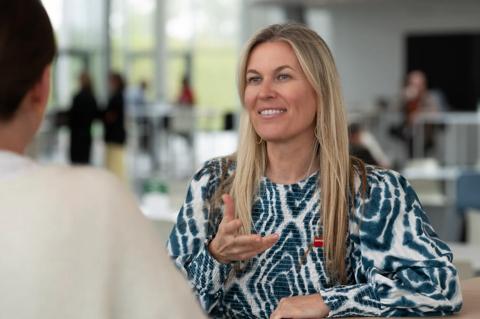
Article · 18 min de lecture · Stratégie · Personnes · Human resources · 10 févr. 2026
When people are empowered to make an impact, that's when the magic happens.
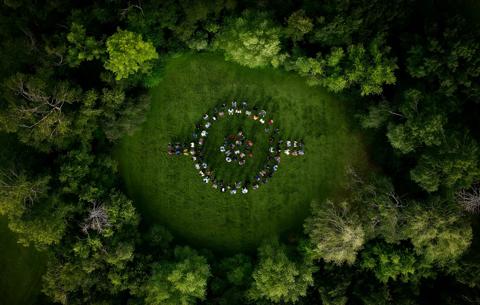
Article · 10 min de lecture · Développement durable · 10 févr. 2026
“The landscape changes, but we keep moving forward.”
Annual Report 2025
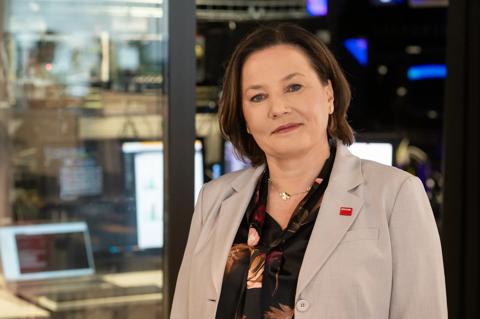
Interview with the CEO
2025 marked a turning point for Barco. After a challenging 2024, we were able to stabilize our position and get back to growth. Read the full interview with CEO An Steegen here.

Results
Here are the 2025 results at a glance.
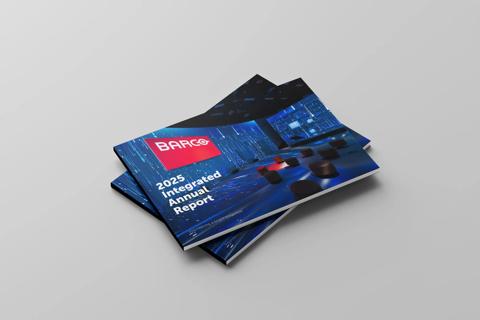
Downloads & Archive
Find all latest annual reports here.