Our ambition is to bring ESG data management to the same level as financial data management. Our ESG tooling helps us collect, calculate, and manage data with the accuracy and governance our stakeholders expect.
“The landscape changes, but we keep moving forward.”
Développement durable · 10 min de lecture
How do you drive sustainability forward in a shifting landscape? Over the past few years, Barco's growing sustainability team has steered the company through several major sustainability milestones – all while keeping the ambitious targets on track. Head of Sustainability Dries Vanneste shares his take on the journey.
Milestones and momentum
If you look back on the past two years, what would you say are the key milestones?
Dries: “When I joined in 2023, Barco already had strong ambition and a solid sustainability record. Over the past two years, we’ve professionalized that further.
In 2023, we went back to our stakeholders to listen and collect input on our material topics. Based on that double materiality assessment (DMA), we updated our sustainability strategy and sharpened our targets in 2024. Then in early 2025, we published our first CSRD-compliant report and worked on carbon reduction targets for 2030 and 2050, which SBTi approved. These were all key milestones.”
Two years ago you said that ESG data was a challenge going forward. Any progress in that field?
Dries: “Yes, ESG data management has been one of our toughest challenges. Collecting and managing reliable, actionable data from multiple sources isn’t easy, yet it’s essential for improving our sustainability performance, meeting reporting requirements, and avoiding greenwashing.
In 2023, we tackled this by appointing a dedicated Sustainability Controller and in 2025 we implemented an ESG data management ecosystem. That has helped us mature our data management from scattered spreadsheets to a centralized, auditable system that drives strategic decisions.”

Making sustainability real across the organization
Data will be key in delivering upon the new SBTi targets and roadmap?
Dries: “Absolutely. We set lofty carbon reduction targets for 2030 and 2050. That was an intensive effort, bringing business units, operations, and many other stakeholders around the table to enlist and model concrete decarbonization actions. Having our climate transition plan validated and integrated into our overall business strategy was a major achievement of many teams across the organization. The validation confirms that our targets are science-based, credible and impactful.”
The plan is really ambitious. Is it achievable?
Dries: “It will be challenging, but decarbonization is increasingly embedded in our operations, product development, and sourcing. We consider it a core driver of innovation. The biggest challenge is that Scope 3 supplier emissions are now also included in our targets.”
We’ve significantly reduced Scope 3 downstream emissions through more energy-efficient technologies and a robust ecodesign roadmap. Now we’re turning our focus upstream, proactively engaging suppliers on footprint reduction.
How is Barco approaching this?
Dries: “We work with over 6,000 suppliers, so cutting supplier emissions will take time. Together with Procurement, we’re developing a supplier engagement program to understand what data our key suppliers can provide, what carbon reduction targets and measures they aim to set and how we can support them. The program will be embedded as much as possible into business strategies review and processes. That’ll be a steep learning curve, but it’s necessary if we want to meet our 2030 targets.”
To meet our 2030 carbon reduction targets, we’ll actively engage and collaborate with our suppliers.
Has sustainability become more deeply embedded across the organization?
Dries: “Definitely. It’s no longer something we do on the side, it’s part of how we run the business. In 2024, we integrated sustainability into our three-year strategic management planning process. In 2025, we embedded sustainability actions in every division’s annual profit plans. Now we aim to tailor actions to specific markets and regions.
And with our ESG data tools, we have clear local ownership for sustainability data, for example on waste, at every Barco site. That makes it much easier to take faster, concrete actions and steer performance.”
We assigned local sustainability SPOCs at our manufacturing and R&D plants globally. This increases local ownership of ESG data and will enables us to develop plant-specific sustainability action plans.
Barco's DMA highlighted product quality, circularity, and diversity & inclusion as key areas where Barco needed to accelerate. What’s happening on these fronts?
Dries: “Our HR team has embedded diversity & inclusion into the culture program and is translating Barco’s cultural values into concrete behaviors. To boost product quality, we set up a dedicated, cross-divisional program that’s already delivering results.
As for circularity, we keep strengthening our ecoscoring methodology by integrating software and now also service offerings like extended warranty, lenses or product-as-a-service offerings. Even more, our sustainability engineers are developing a circularity assessment tool and building a digital eco-twin together with KU Leuven and UAntwerpen. The goal is to create real win-wins: for Barco, our stakeholders, and the planet, while also boosting resilience.”
We launched a digital eco-twin project in 2025. The aim is to build product passports that go beyond compliance, delivering both business insights for us and environmental and product information for our customers.
Navigating a changing landscape

Corporate sustainability feels like it’s at crossroads these days. Do you notice the shift?
Dries: “Great question. For me, it’s about staying resilient and practical. Change is constant, so we try to show how sustainability can be a win-win: good for the planet and good for business.
I also bring in outside perspectives from peers, academics, or industry experts, and translate those insights into clear, actionable roadmaps for Barco. That helps us stay focused on what really matters: the areas where we can make the biggest impact.”

We aim to create real win-wins: for Barco, our stakeholders, and the planet, while also boosting resilience.
The road to 2027
If we talk again in two years, what do you hope you will be able to say?
Dries: “We used 2025 to strengthen our backbone. We now have more ambitious KPIs, and stronger data capabilities and governance. In addition, we’ve significantly expanded our team. We hired a new product sustainability manager and assigned an ESG data controller, there are sustainability leads in every business unit and in Operations, as well as sustainability SPOCs for every manufacturing and R&D plant.
Next comes action. By 2027, I want to see the first reductions in our SBTi roadmap, with sustainability even more deeply embedded in product development, long-term planning, and our customer value proposition. We must also clearly emphasize the positive impact of our technologies, think about how our healthcare solutions improve clinical workflows, consultations, and surgical planning.
Equally important are our people. Having smart, knowledgeable, and ambitious talent is essential for Barco. That means we need to keep investing in retention and attraction, and in building the skills we need today and tomorrow. By 2027, I hope we’ll have more concrete initiatives to strengthen inclusion and further improve the health, safety, and wellbeing of our people.
We’re not finished and that’s okay. After all, we’re on a sustainable impact journey. But we’re moving forward. We’ve become more mature, and that gives me confidence.”

More stories
Article · 18 min de lecture · Stratégie · Personnes · Human resources · 10 févr. 2026
When people are empowered to make an impact, that's when the magic happens.
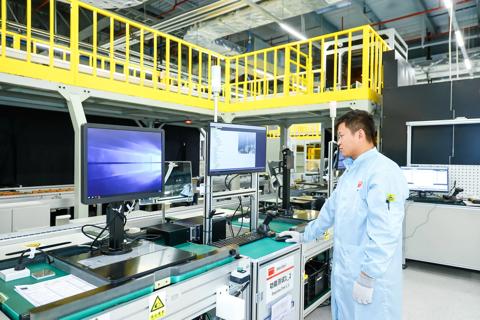
Article · 9 min de lecture · Operations · Stratégie · 10 févr. 2026
How Operations continuously improves flexibility, quality, efficiency and resilience

Article · 8 min de lecture · Développement durable · 10 févr. 2026
How Barco is rethinking talent and leadership, from skills to streetwise learning
Annual Report 2025
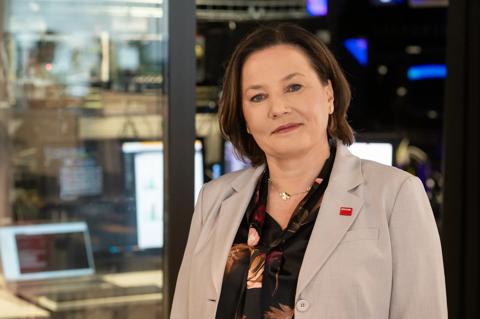
Interview with the CEO
2025 marked a turning point for Barco. After a challenging 2024, we were able to stabilize our position and get back to growth. Read the full interview with CEO An Steegen here.

Results
Here are the 2025 results at a glance.
Downloads & Archive
Find all latest annual reports here.