Risk thinking is built into where and how we produce, but just as well how we source.
How Operations continuously improves flexibility, quality, efficiency and resilience
Operations · Stratégie · 9 min de lecture
Being a technology leader is about more than smart engineers and cutting-edge R&D. Outstanding operations matter just as much: smart factories, agile supply chains, excellent customer services, and the ability to pivot when the world shifts. In recent years, Barco has stepped up its investments in operations around the world. Rob Jonckheere, EVP Global Operations & Services, looks back on a year where that strategy proved its worth.
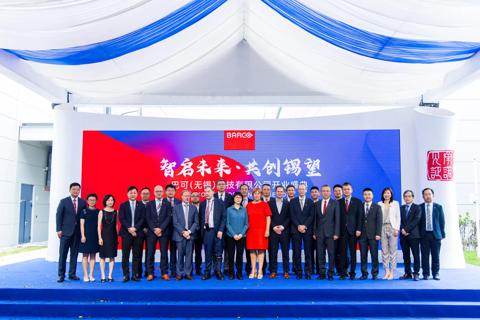
In 2024, Barco opened Wuxi, the second production site in China. How did 2025 play out?
Rob: “The geopolitical context decided things differently than we had hoped. The US import tariffs, regulations and shifting customer requirements pushed us to move part of our production from Wuxi and Suzhou back to Europe. In itself, that isn’t an issue, as our focused factory approach enables exactly this kind of flexibility, our EU factories did have to move to two and even three shifts. This agility gives us room to maneuver and is part of how we balance risk across our footprint.”
For years, you have been stressing how important the mirror factory approach was to balance geopolitical risk. So, that really got tested then, in 2025?
Rob: “Absolutely. The idea behind mirror factories is to have sites that can build the same key components, subassemblies and products, so that we can shift volumes when economics or geopolitics change. 2025 proved that that works.
Still, it’s more than just backup capacity. It's enriching to have several mature sites that learn from each other. We're not yet at the point where every site is equally mature, but that’s clearly the direction we’re heading. Standardization and automation will be the key drivers to ensure this.”
Are there other ways you’ve been building in resilience on the supply side?
Rob: “We took significant steps to de-risk procurement too. Rather than locking us into single suppliers, we’ve built an electronic component database that enables multi-sourcing across all critical categories. This allows us to quickly pivot when a supplier faces shortages. In addition, we invested in integrated risk management software that allows our procurement team to monitor all suppliers in real time. The software alerts us automatically in case of events like strikes or natural disasters. Risk thinking is built into how we source, not just where we produce.”
Were there any breakthroughs on the automation front in 2025?
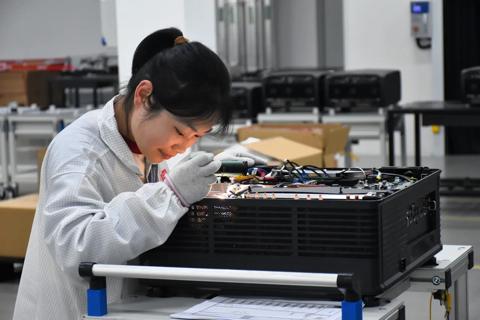
Rob: “We are investing in an automated optical inspection and alignment system for projectors, which we’ll roll out across our factories in Europe and China by June 2026. What’s new here is not the ‘automation’ as such, we already use automated optical inspection for healthcare displays in Suzhou, but the fact we automate a process that’s always been very subjectively assessed. The goal isn’t just efficiency; it’s mainly better and more consistent quality.”
We tend to talk a lot about manufacturing, but what about the service footprint?
Rob: “Services have been on the radar of Global Operations since 2021. Since then, we’ve been pushing hard on operational performance and turnaround time, including a 24/7 ‘follow the sun’ helpdesk model. That means, for example, that Cinema customers worldwide can reach support coverage during evening or weekends.”
What did you specifically change in services in 2025?
Rob: “We brought service logistics closer to customers by opening additional hubs in the UK and the Middle East and we improved supply chain management for our service parts globally. In addition, we localized repair activities that used to sit in the factories. In the US and India, for instance, we now refurbish projector engines locally and in Japan we repair healthcare monitors. That means faster turnaround times for our customers, lower logistic cost and a smaller environmental footprint.”
We also continued to boost the service experience with a more customer-friendly portal that provides 24/7 access to cases and knowledge, and an integrated voice system for phone support.
It’s great to see that customers clearly notice our efforts: our NPS score rose to 64 in 2025!”
Now back to the manufacturing footprint. You’ve outlined ambitious plans for Kortrijk and Saronno too. Are these becoming reality?
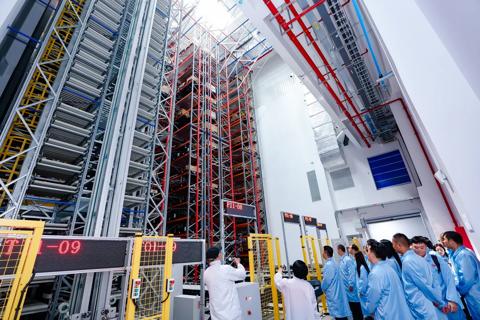
Rob: “In Kortrijk, we kicked off a major revamp of the existing factory. We’re implementing a fully automated warehouse for raw materials and finished goods and shifting our production from push to pull. That will boost productivity, quality and inventory management. As part of this consolidation, we’ll be closing our remote finished goods warehouse in Kuurne and fully integrate those activities into Kortrijk.
In Italy, we’re finalizing the plans for a brand-new site just a few kilometers from our current Saronno location. The land is purchased, permits are approved, and construction will start in Q1 of 2026. The new campus will integrate manufacturing, R&D, service and repair, external warehousing, and the Italian sales office. The team there is really enthusiastic about the plans.”
How do the operations teams in Kortrijk experience this shift?
Rob: “Change is always tougher in a brownfield like Kortrijk than in a greenfield case like Saronno. Revamping the site while it’s running sometimes feels like a sliding puzzle. To support the people we’ve set up a dedicated people track. We communicate frequently with our blue- and white-collar employees, show what’s coming and work with a change coach who guides the whole journey and helps channel resistance.”
What does this increased automation mean for the skills you need on the shop floor?
Rob: “Verticalization and automation mean we need stronger engineering profiles and blue-collar colleagues who can troubleshoot and solve problems. We’re trying to build those skills mainly through internal training and upskilling.”
Read our interview with CHRO Lien Meuleman
Looking ahead, where do you expect digitalization and AI to have the most impact on operations?
Rob: “I see big impact in workflows: order-to-cash, planning, logistics, and purchasing: all the processes that steer material flows. Beyond that, we’re using AI to enhance quality and validation.
On the shop floor, I don’t expect AI-driven humanoid robots any time soon. AI is very powerful in analyzing data but turning that into complex physical actions in a real factory environment is another level. There’s still a way to go.
In services, we’re already using AI to enable more self-services for customers and to support our helpdesks. By tapping into all the data Barco has, AI can recognize patterns and suggest the most likely solution. We’re actively implementing that now. Digitalization is moving fast, so there’s always more we can improve.
By the way, let’s not forget the progress we’re making in sustainability. In 2024, we achieved a 62% reduction in carbon footprint versus our 2015 baseline – well ahead of our 45% target. Looking to 2030, we’ll further our own carbon footprint and work with our suppliers to ensure 30% have Science Based Targets in place. For our Operations team, that remains a crucial focus.”
I’m happy that we’ve been able to invest in operations over the past few years and that we’re seeing the results in flexibility, quality, efficiency and in the overall resilience of our operations.
Innovating operations: our journey from 2022 to the future
2022
Kick-off
Initiating our ambitious focused factories program
2023
Highlights
- Centralizing healthcare manufacturing and repair in Suzhou (CH) and Saronno (IT)
- Introducing optical clear display bonding in Suzhou
- Kicking off construction of the new projector site in Wuxi (CH)
2024
Highlights
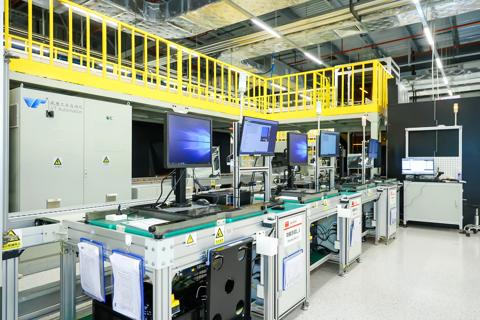
- Opening projector factory in Wuxi (CH)
- Insourcing image processing in Kortrijk (BE)
- Kicking off Phase I automation (HDR) in Kortrijk (BE)
2025
Highlights
- Kick of Phase II factory automation and integrated warehousing in Kortrijk (BE)
- Insourcing video switcher from US to Kortrijk (BE)
- Expanding service repair footprint (US/JP) and hubs (UK/ME)
2026 and beyond
Key focus areas going forward
- Start constructing new site in Italy
- Introducing automated projector alignment (AI) across all projector factories
- Investigating in-house coating of optical elements
More stories
Article · 5 min de lecture · Immersive systems · Encore3 · 10 févr. 2026
Encore3: built for the main stage
Article · 9 min de lecture · Cinéma · HDR · 10 févr. 2026
Into the spotlight: how Barco Cinema wrote its own script

Article · 5 min de lecture · Immersive systems · Divertissement · 10 févr. 2026
Barco at World Expo 2025 Osaka: a visual story
Annual Report 2025
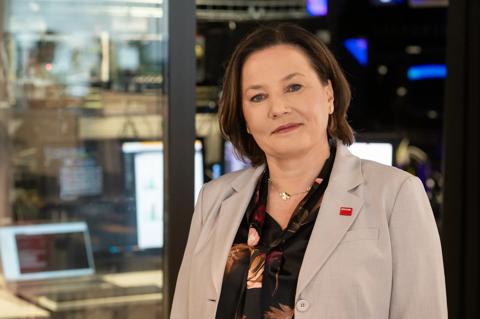
Interview with the CEO
2025 marked a turning point for Barco. After a challenging 2024, we were able to stabilize our position and get back to growth. Read the full interview with CEO An Steegen here.

Results
Here are the 2025 results at a glance.
Downloads & Archive
Find all latest annual reports here.