“For decades, exam rooms have relied on the same flat black and white radiology images that leave many patients nodding politely but walking away confused,” said Elodie Litzler, PhD, co-founder and Chief Operations Officer of Avatar Medical. “The Clinic of the Future isn’t about adding more screens. It’s about clarity. When people can actually see what their doctors see, in a format that feels as intuitive as any modern consumer technology, it brings calm, confidence, and real partnership back into care.”
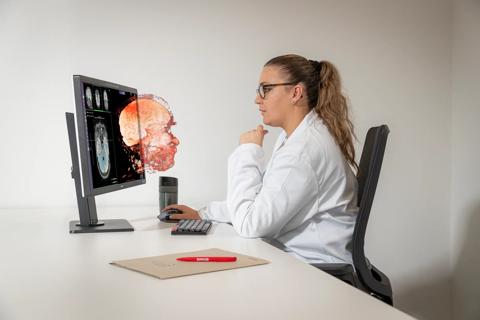
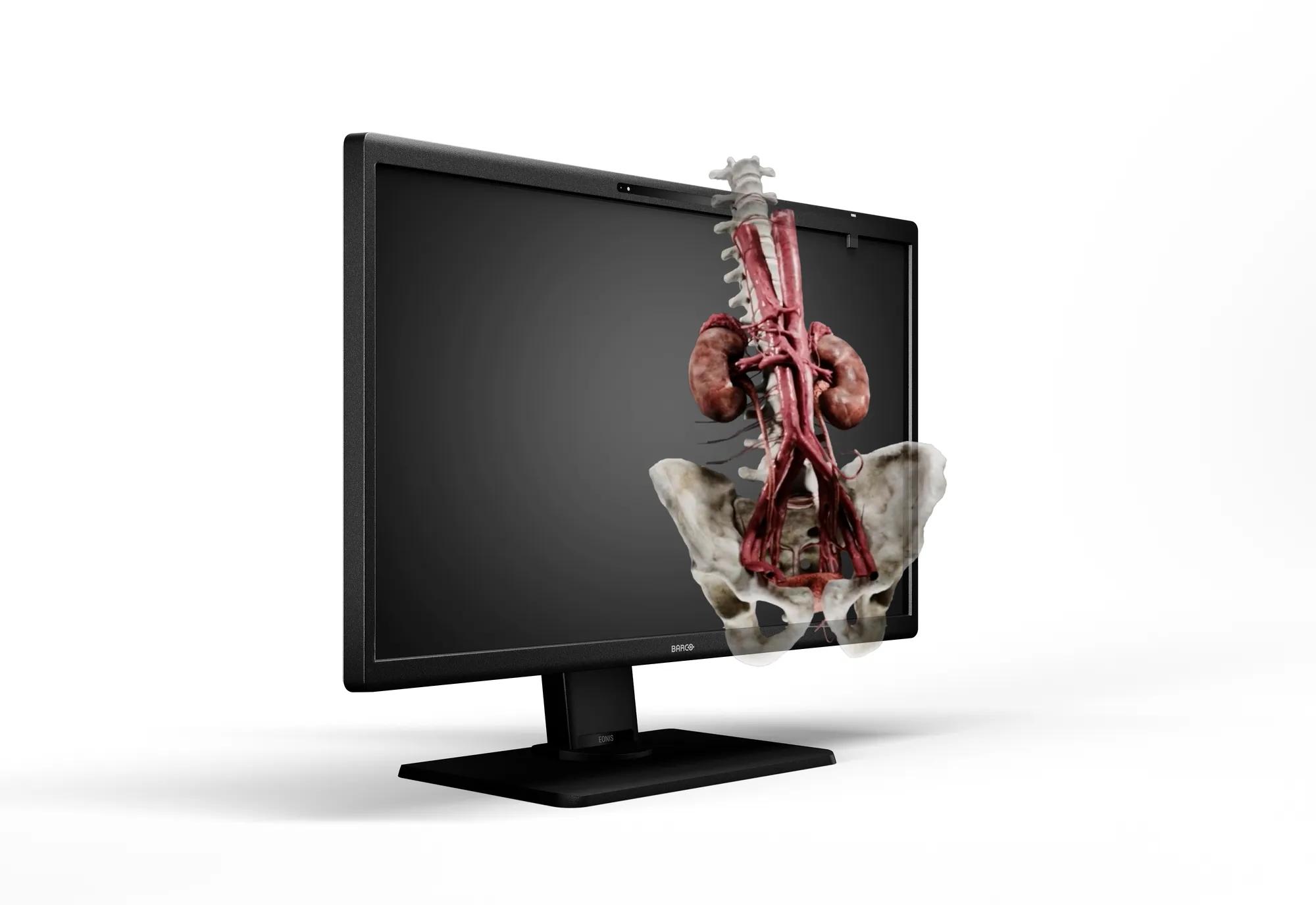
While the technology behind Eonis Vision is sophisticated, its purpose is simple: to help patients finally see and understand their own medical images the way doctors do - in natural, intuitive 3D. No goggles. No VR headsets. Just a shared experience that turns previously confusing scans into something all can comprehend.
This evolution matters. According to the CDC, nearly nine out of ten U.S. adults struggle to understand routine health information when it’s presented in technical or unfamiliar ways(1). And recent findings from the Milken Institute show that limited understanding of one’s health can contribute to missed follow-ups, delayed care, and poorer long-term outcomes.(2) In that context, Eonis Vision offers something powerful - medical information people can finally see clearly.
“The exam room hasn’t changed in half a century, but in neurosurgery, we’re watching that change happen in real time with a variety of advanced tools,” said Michael Ivan, M.D., Associate Professor of Neurological Surgery and Director of Skull Base Surgery at the UHealth - the University of Miami Health System and Miller School of Medicine. “Tools such as Eonis Vision are promising in helping to enhance the patient experience and understanding. In seeing patients interact with the technology, it appears to shift the dynamic immediately. Instead of listening to a surgeon talk through a flat, grayscale scan, the system allows patients to finally see what we’re discussing. That clarity reduces fear, strengthens trust, and helps them move forward with far more confidence.”
While at CES, attendees can experience this evolution firsthand. In Avatar Medical’s Eureka Park booth, visitors will step up to a medical-grade display and watch familiar CT and MRI scans transform into accurate, depth-rich 3D anatomy. The result feels less like looking at a medical image and more like looking at an object placed directly in front of you.
What makes the experience compelling isn’t just the technology powering it, Avatar Medical’s imaging medical device software, Barco’s glasses-free 3D display, and a high-performance Dell Precision™ workstation accelerated by NVIDIA technologies for fast, efficient 3D rendering, but how immediately familiar and understandable it feels. As part of the NVIDIA Inception program, we’re continuing to deepen this foundation, leveraging NVIDIA’s Blackwell architecture to further expand performance and scale. The experience is like shifting to color TV, the first iPhone, or TiVo: that immediately made sense. This is consumer technology meeting healthcare at a moment when patients expect clarity, not complexity.
The showcase offers a glimpse of what medical visits could soon become: clearer conversations, less confusion, and far more human interactions. Clinicians gain a tool that reduces the time spent translating complexity. Patients leave with a genuine understanding, rather than uncertainty.
Avatar Medical will be holding live demonstrations in Eureka Park, at Booth #60401, within the French pavilion coordinated by Business France.
(1) Centers for Disease Control and Prevention (CDC): “Talking Points About Health Literacy”
(2) Milken Institute — Health Literacy in the United States (2022)