
If the skills fit, a less perfect CV shouldn’t stand in the way. That mindset will help us broaden our talent pool and strengthen diversity.
Développement durable · 8 min de lecture
The perfect job candidate doesn’t always look perfect on paper. That’s why Barco's HR team is adopting a skills-based approach to talent. “True equality begins when we look beyond CVs, degrees and job titles and focus on skills, potential, and the value each person brings,” says CHRO Lien Meuleman. In this article, you’ll discover how Lien and her team are making it happen – and how the leadership team is pushing well beyond its comfort zone.
“Barco wants to grow into a skills-based organization,” Lien explains. “Hiring managers traditionally look at education, previous employers or job titles. Now we’re increasingly focusing on what candidates have actually done, what skills they’ve learned and what they want to learn next. By the way, that applies whether we’re hiring externally or from within.”
The payoff? “By starting with skills rather than labels, we uncover talent we might have missed. Our pool of candidates – and our diversity – will expand."

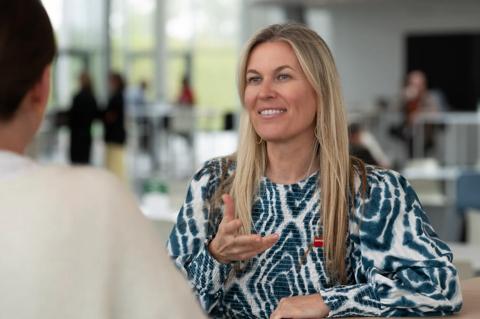
If the skills fit, a less perfect CV shouldn’t stand in the way. That mindset will help us broaden our talent pool and strengthen diversity.
Moving to a skills-based approach does require some groundwork. “We have to understand what skills we need for every role,” says Lien. “So, in 2025, we kicked off a massive simplification exercise, reducing the number of distinct roles at Barco from a massive 1,500 down to 190."
"With the help of our stakeholders in the business units and AI, we are now defining the actual skillset for each role, instead of relying solely on titles like ‘senior engineer’ or ‘sales manager’. Besides technical skills, these include capabilities such as listening, stakeholder management, data literacy, coaching, storytelling, ... “
Slowly, a skills map is emerging, providing an overview of which skills are widespread in Barco, which are scarce, and where the gaps are. A digital add-on in SAP SuccessFactors will support HR, the business, as well as the employees in matching skills with opportunities.
A digitally enabled, skills-based approach makes it easier to tap into talent already within the company.

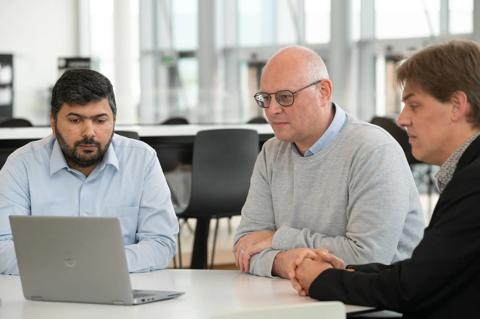
Recruiters look beyond diplomas and job titles to the skills candidates actually bring. That opens the door to more diverse profiles and hiring decisions that fit Barco’s future needs.

With defined skills per role, Barco knows exactly which capabilities matter where. This makes learning and development more focused, targeted and impactful.

Employees get a clear view on their current skills and the skills needed for other roles, making internal moves more transparent. The digital platform will allow them to enter their aspirations (e.g. “I want to become a product manager someday”) and see which skills and steps will help them get there. The system will also nudge them when a role opens that matches their skills.

When a role opens, managers can see which skills are available across teams and locations, and the system will match the required skills with suitable profiles.
Skills matter at every level. So what skills are a prerequisite for Barco’s leadership team? “Today’s volatile world needs leaders who can handle change, listen, coach, inspire, and co-create,” says Lien.
To equip the leadership team with those skills, Barco has created leadership development programs at different levels and on different topics, tailored to business needs. “Most recently, we launched a radically different kind of training called Lead the Change, where seven members of the Executive team joined a six-month development journey with long-time partner StreetwiZe.
“StreetwiZe organizes experiential leadership programs with people who face extraordinary challenges,” Lien explains: “The concept starts from the intriguing observation that children in difficult conditions, like street children, often show exactly the skills leaders need: resilience, adaptability, and customer focus. For them, these skills are vital to survive and even build a micro-business in the slums, under conditions where most of us wouldn’t survive for a day. By connecting leaders with these children, StreetwiZe wants to let them experience what it means to work with limited resources and under high pressure.”
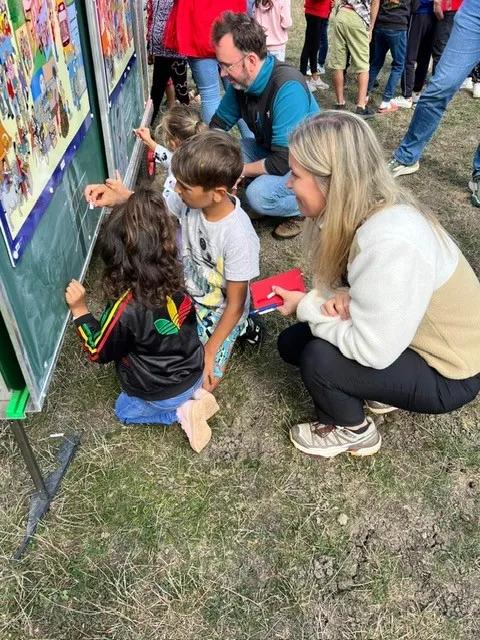

One of the most important things was the bonding, team building and collaboration I had with the rest of the team. We really connected on a deeper level. That will help us lead the change in the organization.
In September 2025, the participants travelled to Romania, where they engaged with the street children’s and worked on concrete local challenges. In this way, they rediscovered basic skills: how to listen without filling in the blanks yourself, how to test an idea in a context you don’t control, how to build trust when you are clearly the outsider.
Today, the group is still meeting regularly to translate the lessons from the street to their own work and tackle real business challenges. “In the end, we’re sure this journey will provide them with valuable skills to successfully steer Barco through the coming years,” Lien concludes.
If we can do what we do with a clear purpose, and share that with our teams, it will have a real impact.
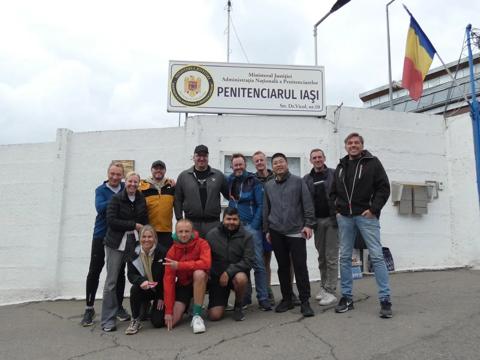
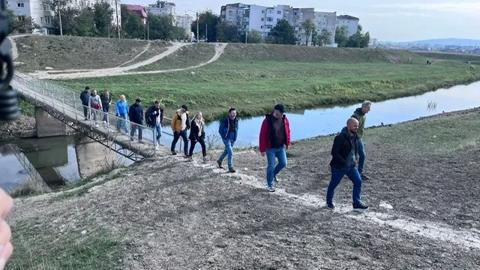
StreetWiZe organizes experiential leadership programs in refugee centers, juvenile detention centers, and mobile schools for street children. The premise: learn leadership by truly connecting with people facing extraordinary challenges every day.
For about ten years, Barco has partnered with StreetwiZe, first through keynotes, later through training. StreetwiZe is linked to Mobile School, an organization that develops mobile schools for street children. Every euro StreetwiZe earns flows back into that mission.