
Ricerca Barco

Notifiche myBarco

Non letto

Leggi

Non hai ricevuto alcuna notifica.

The secrets of UniSee Mount revealed

ISE · 1 minuti di lettura

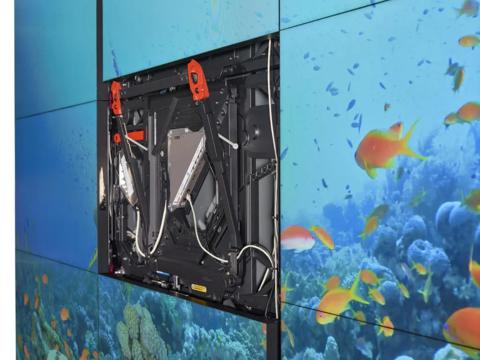
UniSee Mount, the innovative video wall mounting structure that supports the Barco UniSee platform, was designed to counter the issues with existing mounting brackets. The goal was to create a video wall mount that guarantees precise installation and maintenance, ensures the smallest gap (at time of installation, but also over time), and allows easy expansion. The design team surprised everybody with a structure that contains so many bright ideas that we just had to write a technical paper to explain them all.

You might already know that gravity is a driving force of the UniSee Mount. But how exactly does that work? And why do we claim that installation is so much easier using the new mounting structure? Plus, which additional secrets are hidden behind these innovative mechanics?

This paper describes clearly the principles used to design the UniSee Mount. So here's your chance to learn all about the patented technology behind trouble-free alignment and easy servicing.

To paper download page


Other articles by this author

Related articles

notizie · 6 minuti di lettura · Revisione futura · 13 gen 2017

Top 5 questions to ask when selecting a video wall

Millions of square feet of video walls are being installed annually − and the market is enjoying double-digit growth. There are more options than ever when it comes to building large video walls for 24/7 control rooms. While some video walls must “wow” prospective viewers visually to catch their attention (i.e., advertising ala digital signage), others focus on ergonomic design, functionality, serviceability, and critical data within a continually manned 24/7 decision-making environment (i.e., control room).

beautiful colored smoke on white
notizie · 4 minuti di lettura · Display · Revisione futura · 20 giu 2019

What is a display’s white point and why should you care about it?

The white point in color definitions is probably one of the least known parameters on a display’s spec sheet. Because what does it even mean? White is white, no? Most people know it is the combination of all wavelengths of light. So how come different settings exist in the market? The reason is that the theoretic value of white is never seen in reality. If you look at a white piece of paper for example, it will be colored by the light source that shines on it. In other words it will look different when you look at it under sunlight conditions, than under artificial light in your office. The same goes for displays. However, the cool thing is that we can often choose the white point of the display. Tampering with the white point setting will consequently impact and define the mood of the image. Note that for convenience we will be talking about displays in this article, but the same goes for just about any visualization device, including projectors and direct view LED tiles.