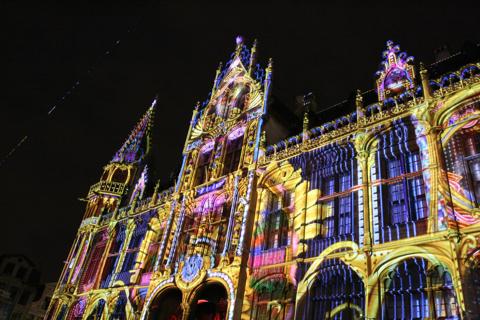
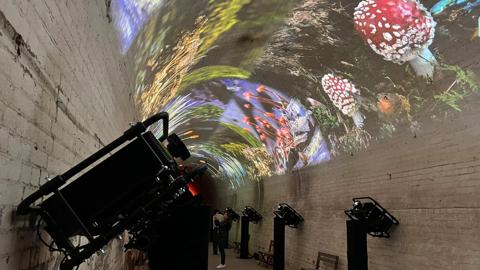
From passive viewing to active participations
What makes projection mapping so effective is its ability to transform passive viewers into active participants. In recent installations, I’ve noticed more interactive elements, such as gesture recognition, audience-triggered animations, or mobile integration, that allow visitors to influence the story in real time. This interactivity fosters a sense of agency and personal connection, making the experience more memorable and meaningful.
Research shows that immersive storytelling significantly boosts knowledge retention and emotional connection. In cultural tourism, this means visitors don’t just see a site, they experience its story. They walk away entertained, informed and inspired. And in my view, this is particularly valuable for heritage locations where traditional interpretation methods may fall short.
A platform for public-private partnerships
Projection mapping is inherently collaborative. Governments, cultural institutions, and private companies must work together to fund, design, and deliver impactful experiences. In Singapore, for example, government support for the arts has included digitalization grants and capability development programs – helping festivals like i Light Marina Bay thrive.
These partnerships are essential for scaling video mapping initiatives and ensuring long-term sustainability. They also create opportunities for local artists, designers, and technologists to co-create experiences that are both visually stunning and culturally resonant, and contribute to their city’s transformation.