Barco zoekopdracht

myBarco-meldingen

Ongelezen

Lezen

Je hebt geen meldingen.

Security in control rooms: protecting critical operations in an interconnected world

Control rooms serve as the nerve centers for critical infrastructure across industries – from managing power grids and transportation networks to coordinating emergency responses and securing sensitive facilities. As these environments become increasingly digitized and interconnected, the stakes for control room cybersecurity have never been higher. A single breach can cascade into operational shutdowns, safety incidents, or compromised national security. According to the Cybersecurity and Infrastructure Security Agency (CISA), ransomware attacks on critical infrastructure have increased by 37% (from 2022 to 2024), making robust security architectures not just advisable but essential.

This page explores why security control room infrastructure demands a fundamentally different approach than traditional IT environments, examines common but inadequate security strategies, and reveals how modern platforms like Barco CTRL are redefining what's possible when organizations refuse to compromise between operational efficiency and uncompromising protection.

Table of contents

Why security is paramount in control room environments

Control rooms occupy a unique position in the security landscape. Unlike typical office environments where a breach might compromise data or disrupt operations temporarily, control room security failures can have catastrophic real-world consequences. When operators lose visibility into power distribution systems, transportation networks fail to coordinate safely, or emergency response centers cannot communicate effectively, lives hang in the balance.

The convergence of Operational Technology (OT) and Information Technology (IT) has transformed control rooms into prime targets for sophisticated threat actors. Traditional OT systems were designed with physical isolation as their primary defense – the proverbial 'air gap' that prevented digital intrusion. However, modern operations demand connectivity. Operators need access to real-time data from distributed sensors, cloud-based analytics, and remote expert systems. This connectivity, while operationally essential, creates attack surfaces that adversaries are increasingly exploiting.

security control room visuals

Consider the NotPetya attack of 2017, which caused an estimated $10 billion in damages globally by targeting critical infrastructure operators. Or the Colonial Pipeline ransomware incident in 2021, which disrupted fuel supplies across the eastern United States and demonstrated how vulnerable essential services remain to cyber threats. These incidents underscore a crucial reality: control room cybersecurity isn't just about protecting data – it's about safeguarding the systems that keep societies functioning.

2. The unique threat landscape of control rooms

Control room environments face security challenges that extend far beyond typical enterprise IT concerns. First, the systems they manage often operate continuously – downtime for security patches or system updates can have immediate operational consequences. An energy control room cannot simply take systems offline during peak demand to install security updates.

security control room visuals

Second, control rooms aggregate data from multiple security domains simultaneously. A single operator workspace might display classified government information alongside public surveillance feeds, or combine data from isolated operational networks with internet-connected business systems. Managing these information flows without creating cross-domain vulnerabilities demands sophisticated security architectures that most traditional solutions cannot provide.

Third, the human element introduces complexity that purely technical solutions cannot address. Operators make split-second decisions that can impact thousands of lives. Security measures that impede their ability to access critical information or slow their response times can actually reduce overall security by encouraging workarounds or creating dangerous delays. As explored in our article on securing control room technology in the IT-OT convergence, effective security must enable operations rather than constrain them.

3. Regulatory pressures intensifying security requirements

The regulatory environment surrounding control room security is rapidly evolving, creating both compliance obligations and liability exposure for organizations that fail to implement adequate protections. The EU's NIS2 Directive, which came into force in January 2023, establishes stringent cybersecurity requirements for entities operating essential and important services. Under NIS2, executives can be held personally liable for cybersecurity failures, with administrative fines reaching €10 million or 2% of global annual turnover for essential entities.

Similarly, the EU Cyber Resilience Act (CRA), which becomes applicable after its transition period in December 2027, will legally require manufacturers to handle vulnerabilities and provide security updates without undue delay for a product's lifecycle. As discussed in our analysis of liability in control rooms, these regulations fundamentally shift how cybersecurity responsibility is allocated, particularly at the executive level.

In the United States, the Cybersecurity and Infrastructure Security Agency (CISA) continues to release guidance and requirements for critical infrastructure operators, while sector-specific regulations like NERC CIP for electrical utilities impose detailed cybersecurity standards with significant penalties for non-compliance. According to NERC's compliance enforcement data, penalties for CIP violations can reach millions of dollars per incident, making robust control room cybersecurity not just a technical imperative but a financial one.

4. Traditional approaches to control room security – and why they fall short

Organizations have historically approached control room security through several common strategies, each with significant limitations that become increasingly problematic as operational demands evolve.

The air gap illusion: complete isolation

Perhaps the oldest security strategy is complete network isolation – the 'air gap' approach where critical systems have no network connectivity whatsoever. While this provides strong protection against remote attacks, it creates operational paralysis in modern environments. Operators cannot access cloud-based analytics, remote expert systems, or real-time data from distributed sensors. Maintenance requires physical presence at each system, and sharing information between isolated networks becomes a manual, error-prone process involving USB drives or printed documents.

Moreover, the air gap often proves more theoretical than real. Organizations that believe their systems are air-gapped frequently discover unauthorized network connections created by well-meaning employees trying to improve efficiency. The Stuxnet incident demonstrated that even genuinely air-gapped systems remain vulnerable to sophisticated attacks via USB devices and supply chain compromises. Complete isolation is increasingly recognized as neither achievable nor desirable in modern control room environments.

Traditional KVM: bridging gaps without integration

Many control rooms adopted KVM (Keyboard, Video, Mouse) switches as a compromise between isolation and usability. As explained in our primer on what is a KVM switch, these devices allow operators to control multiple segregated systems using a single set of peripherals. Traditional KVM over IP extended this capability across network distances, enabling remote access while maintaining network separation.

However, as discussed in our article beyond KVM to true integration, traditional KVM solutions create their own problems. Each connected system exists in its own silo with distinct interfaces and user experiences. During crisis situations, operators waste precious seconds mentally connecting information displayed across multiple disparate systems. The cognitive load of constantly adapting to different interfaces and security protocols reduces efficiency exactly when it matters most.

Furthermore, traditional KVM over IP solutions often lack the sophisticated security features that modern threat landscapes demand. They may not support multi-factor authentication, comprehensive audit logging, or granular access controls. Their security posture typically relies on network perimeter defenses, which become inadequate as insider threats and supply chain vulnerabilities proliferate.

Patchwork security: adding protections to legacy systems

Organizations often attempt to secure existing control room infrastructure through layered additions: VPNs, firewalls, intrusion detection systems, and access control mechanisms stacked atop legacy platforms. While defense-in-depth is sound security strategy, retrofitting protection onto systems never designed with security as a core requirement creates fundamental vulnerabilities.

Each layer introduces complexity, and the interfaces between layers become potential attack vectors. Security updates for one component may break compatibility with others. Most problematically, these patchwork solutions cannot address security flaws inherent in the underlying architecture. As one security researcher noted in a SANS Institute analysis, 'You cannot patch your way to security if the foundation is fundamentally insecure.'

security control room visuals

The false choice between security and usability

Perhaps the most damaging aspect of traditional approaches is the implicit assumption that security and usability exist in tension – that stronger protection necessarily means more friction for operators. This leads to organizations either accepting inadequate security to maintain operational efficiency, or implementing security measures that operators circumvent because they impede critical functions.

Security measures that require operators to enter multiple passwords when switching between systems, that prevent efficient information sharing, or that create delays during crisis response don't only frustrate users, but create security vulnerabilities. Frustrated operators find workarounds, write down passwords, or avoid security features entirely. The resulting 'security theater' provides the appearance of protection without the substance.

5. The Barco CTRL approach: security by design for control room cybersecurity

Barco CTRL represents a fundamentally different approach to control room security – one that recognizes security must be architected into the platform from inception rather than added as an afterthought. As detailed in our exploration of the five pillars of Barco CTRL's secure by design process, this comprehensive control room platform was built from the ground up following security by design principles, conceived with best practices like Zero Trust and Shift Left in mind.

KVM over IT: beyond traditional KVM over IP

Barco positions CTRL as 'KVM over IT' rather than simply KVM over IP – a distinction that captures the platform's comprehensive integration with modern IT infrastructure. Where traditional KVM over IP solutions simply transport video, keyboard, and mouse signals across networks, Barco CTRL is fully IT-integrated, seamlessly connecting to web sources and Virtual Desktop Infrastructure (VDI).

This IT integration enables sophisticated security features that traditional KVM solutions cannot match. Barco CTRL supports Multi-Factor Authentication (MFA), eliminating the password fatigue that plagues traditional multi-system environments. Operators authenticate once with strong credentials, then access all authorized systems without repeatedly entering passwords – a user experience that actually encourages security compliance rather than circumvention.

The platform integrates with enterprise identity providers, enabling centralized user management and ensuring that access rights remain synchronized across the organization. When an employee changes roles or leaves the organization, their access to control room systems updates automatically rather than requiring manual coordination across multiple isolated platforms.

security control room visuals

Comprehensive audit and accountability

Security without accountability is merely obscurity. Barco CTRL implements comprehensive audit logging that creates complete trails of all system access and operator actions. Barco CTRL's approach ensures that security teams have visibility into control room operations without requiring intrusive monitoring that could impede operator efficiency.

The five pillars of control room cybersecurity

Barco CTRL's security architecture rests on five fundamental pillars that work together to create defense-in-depth without operational compromise:

1. Identity Management: Built on zero-trust architecture, the platform upholds rigorous authentication and authorization at every access point. Users and devices must prove their identity before accessing any system resources, and that authentication extends to device-level verification – preventing unauthorized hardware from connecting to the network even if credentials are compromised.

2. Communication Protection: All communications utilize certificate-based encryption with TLS 1.3 protocols (or TLS 1.2 as fallback if TLS 1.3 is not supported), ensuring both confidentiality and integrity. This protection extends to communications between all system components, not just external connections, preventing lateral movement if perimeter defenses are breached.

3. System Protection: The platform implements 360-degree protection from the moment devices boot through system updates and ongoing operations. Secure boot processes prevent unauthorized firmware from loading, while encrypted storage protects data at rest. This comprehensive approach ensures security isn't limited to runtime operations but extends through the entire system lifecycle.

4. Audit Logging: Building comprehensive audit trails creates full accountability for all system access and actions. These logs capture not just successful authentications but failed attempts, configuration changes, and data access patterns – providing the evidence needed for both real-time threat detection and post-incident forensic analysis.

5. Media Protection: Encrypting and controlling the distribution of content, prevents data breaches and ensures the confidentiality and integrity of sensitive information, bolstering overall cybersecurity in the control room environment.

Bridging the IT-OT divide

One of control room security's most persistent challenges is the cultural and technical divide between IT and OT environments. As Timo Kosig, Product Security Officer at Barco Control Rooms, explains in his article on securing control room technology in the IT-OT convergence, IT departments embrace rapid innovation and frequent updates, while OT environments prioritize stability above all else. When you're responsible for managing power grids or transportation networks, downtime can have catastrophic consequences.

Barco CTRL bridges this divide through architectural choices that respect OT's need for stability while incorporating IT's security sophistication. The platform's modular architecture means component failures remain isolated – one malfunctioning component cannot cascade into system-wide outages. Updates can be tested and deployed with minimal operational disruption, often during brief maintenance windows rather than extended shutdowns. Additionally, redundancy of critical components makes sure that even in the case that a device malfunctions, a spare will take over to ensure continued operations.

This approach recognizes that security updates cannot wait for annual maintenance cycles in modern threat environments. The median time from vulnerability disclosure to active exploitation has dropped to roughly 5 days as of 2025. Control rooms running year-old software versions operate with known vulnerabilities that attackers actively target. Barco CTRL's streamlined update process enables organizations to patch critical vulnerabilities within hours rather than months, dramatically reducing exposure windows.

Security that enables rather than constrains

Perhaps Barco CTRL's most significant security innovation is its recognition that effective security must enable operations rather than constrain them. The platform creates a unified operational canvas that brings together information from multiple segregated networks onto a single coherent workspace. While the underlying networks remain completely isolated – maintaining the security boundaries that protect critical systems – operators experience seamless integration.

This unified approach eliminates the cognitive load and time delays associated with switching between disparate systems during crisis response. Operators maintain full situational awareness without compromising security domains, and they can share relevant information across video walls and workstations with appropriate access controls ensuring that data never crosses security boundaries inappropriately.

The user experience remains consistent across all connected systems, reducing training requirements and eliminating the interface confusion that can lead to dangerous errors during high-stress situations. Security becomes transparent to legitimate users while remaining impenetrable to unauthorized access – precisely the balance that control room environments demand.

6. Scalability and future-proofing in security control room infrastructure

Security architectures that cannot scale with operational growth quickly become obsolete. Barco CTRL was designed from inception for scalability, enabling organizations to start with basic configurations and expand to global, multi-site deployments without architectural redesigns or security compromises.

security control room visuals

The platform's modular architecture means adding capacity requires simply deploying additional encoders for new input sources or decoders for expanded operator positions and video walls. As detailed in our announcement about Barco and Extreme Networks creating the connected control room, this scalability can extend beyond single facilities to create secure connections between distributed control rooms across continents, enabling organizations to leverage expert knowledge regardless of geographic location while maintaining comprehensive security.

The partnership with Extreme Networks demonstrates how Barco CTRL's IT-integrated architecture enables sophisticated networking capabilities that traditional control room platforms cannot match. Through Extreme's SD-WAN technology and Secure Fabric switching, organizations can securely share critical control room information across multiple locations via satellite communication channels, creating resilient operational networks that maintain security even when primary fiber connections fail.

7. Continuous security evolution

Barco maintains a dedicated security roadmap with regular penetration testing and continuous security enhancements. The company holds ISO 27001 certification for information security management, demonstrating commitment to systematic security practices that extend throughout the organization. Security is thus not treated as a one-time achievement but as an ongoing process that adapts to evolving threats.

Quarterly software updates deliver not just functional enhancements but security improvements informed by the latest threat intelligence. The streamlined update process means organizations can deploy these improvements during brief maintenance windows rather than waiting for major version upgrades, keeping their security posture current without operational disruption.

8. The future of security control room operations

Control room cybersecurity stands at an inflection point. Traditional approaches that treat security and operations as competing priorities increasingly fail to meet either need. Air gaps create operational paralysis. Patchwork security layers introduce complexity without addressing fundamental vulnerabilities. Traditional KVM solutions bridge networks without integrating them, leaving operators struggling with fragmented interfaces exactly when coherent situational awareness matters most.

The future belongs to platforms that refuse this false choice – that recognize security and operational excellence as complementary requirements rather than competing concerns. Barco CTRL demonstrates what becomes possible when security is architected into platforms from inception rather than retrofitted onto legacy systems. Its KVM over IT approach transcends traditional KVM over IP limitations through comprehensive IT integration, supporting sophisticated authentication, centralized identity management, and enterprise-grade audit capabilities.

The platform's five-pillar security architecture – Identity Management, Communication Protection, System Protection, Audit Logging, and Media Protection – creates defense-in-depth that protects at every layer from boot processes through ongoing operations. This comprehensive approach addresses the complete security lifecycle rather than focusing narrowly on perimeter defense or runtime protection.

Perhaps most importantly, Barco CTRL demonstrates that security can enable rather than constrain operations. By creating unified operational canvases that bring together information from multiple segregated networks while maintaining appropriate security boundaries, the platform delivers the coherent situational awareness that effective crisis response demands. Operators work more efficiently not despite security measures but because of them.

As regulations like NIS2 and the EU Cyber Resilience Act make comprehensive security not just advisable but legally required, and as threat actors continue developing increasingly sophisticated attacks against critical infrastructure, control room operators face a clear choice: continue struggling with inadequate security approaches that were never designed for modern threat landscapes, or embrace platforms architected from inception for the challenges ahead.

The stakes extend far beyond individual organizations. Control rooms manage the systems that keep societies functioning – power grids, transportation networks, emergency response coordination, and critical infrastructure of all kinds. Their security protects not just data and operations but public safety and national security. That responsibility demands security architectures worthy of what they protect.

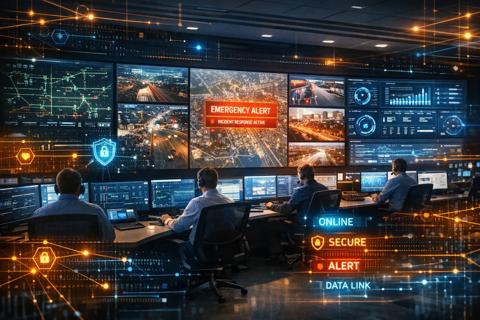
9. Experience the future of control room cybersecurity

Discover how Barco CTRL can transform your control room security posture while enhancing operational efficiency. Our security experts are ready to discuss your specific requirements and demonstrate how comprehensive security by design can enable rather than constrain your critical operations.

Request a personalized demo to see Barco CTRL in action and explore how it can secure your control room environment.