Adapting a room strategy while the technology is still in use is one consideration. Eventually leaving or replacing the solution is another.
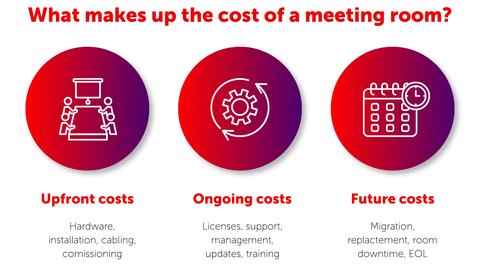
When equipment reaches the end of its useful or supported life, organizations may need to remove devices, transfer room accounts, update integrations, replace hardware, and revise support documentation. A planned refresh can still create room downtime and require project resources, while the equipment that cannot be reused may become a stranded investment.
The commercial model matters here. AV as a Service, for example, can bundle equipment, support, services, and refresh cycles into a recurring fee. Traditional ownership places more of those decisions and costs directly with the organization.
For AV as a Service, buyers should check what happens at the end of the agreement, including who owns the equipment, which offboarding services are included, and what happens to installed cabling and room integrations. Under a traditional ownership model, the organization will need its own plan and budget for replacement, removal, or redeployment.
Whichever approach you choose, understand both sides of the commitment.
What will it cost us to live with this decision? And what will it cost us to change it?