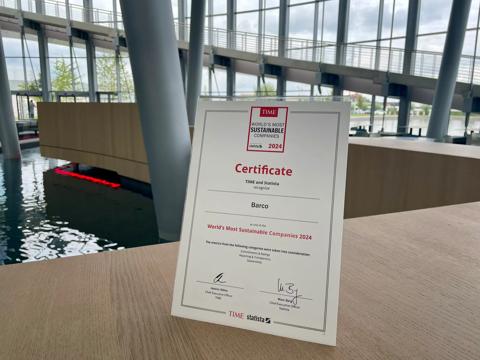
The assessment examines multiple dimensions of software sustainability:
Energy efficiency: The team evaluates how efficiently the software is written and whether it includes features like power scaling when going into idle mode. For Barco CTRL, energy efficiency was a focus point from the start. Contrary to previous generation solutions, Barco CTRL is deployed on Eco-labeled hardware products.
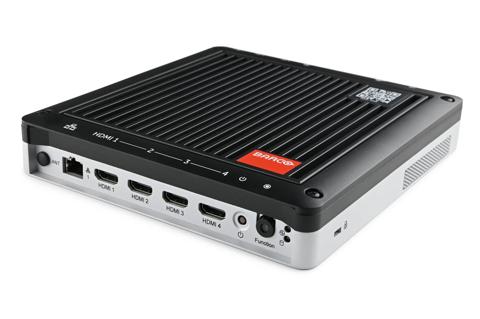
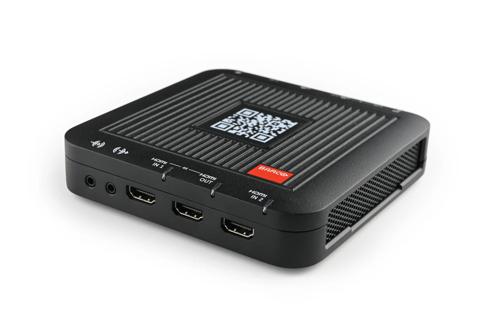
Customer impact: The assessment considers whether the software contributes to the overall energy efficiency of both the customer's operations and Barco's own products. Because Barco CTRL requires modest computation power, the system needs less hardware. In addition, the hardware used is also notably sustainable (with the SAN-050 and SAS-050 achieving A++, NGS-D440 scoring A+ and the SAS-500 boasting an A Eco-score).
Longevity and security: Barco offers best-in-class security update support, recognizing that sustainability and security are intrinsically linked. The longer software remains secure and supported, the longer customers can continue using their hardware. Since security vulnerabilities are a primary reason for product obsolescence, extended support directly extends product lifespans.
Data management: The software includes encryption capabilities that enable hardware reuse, and configurable data retention windows help minimize storage footprints.
Cloud and AI considerations: For products with cloud hosting components, Barco demands best-in-class providers aligned with European taxonomy criteria. The methodology also evaluates whether AI implementations, when present, are appropriately scoped to avoid unnecessary computational overhead. This was not the case for Barco CTRL.
The assessment also connects to Barco's service score initiative, evaluating how customer-friendly the software is to service and maintain.