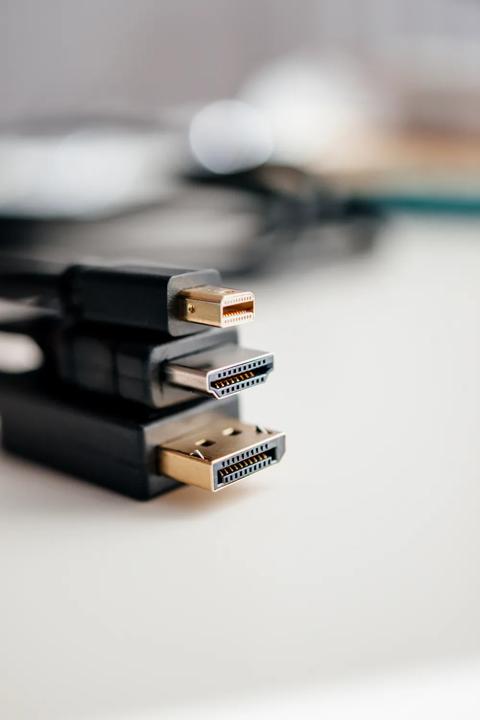
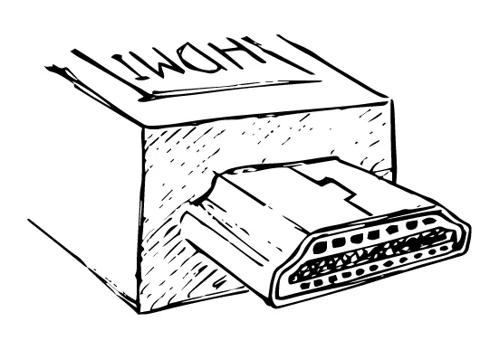
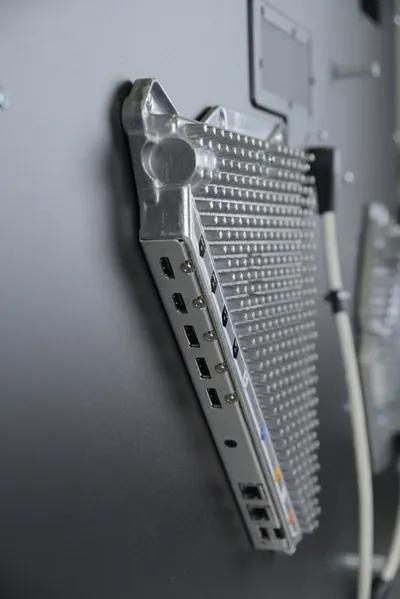
Meanwhile, HDMITM 2.1 has been launched, supporting 4K at 120 Hz or 8K at 60 Hz, and offering 48 Gbps speeds. This standard has since become common in consumer products such as TVs, game consoles and graphics cards. Keep in mind that 8K at 60 Hz over HDMITM 2.1 relies on 4:2:0 color or compression. In June 2025, the HDMI Forum released HDMITM 2.2, which doubles the bandwidth to 96 Gbps. Ultra96 cables are on sale already, but the first devices are expected in 2027.
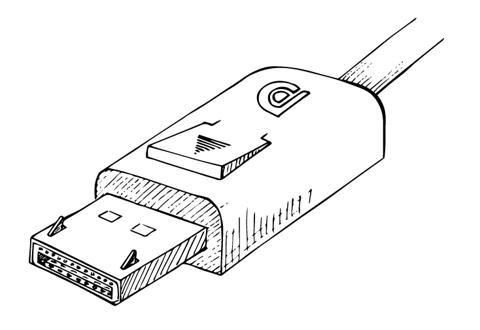
DisplayPort 2.0 (since updated to 2.1), boasting 10,240 x 4320 resolution and a whopping 77.4 Gbps bandwidth, is no longer a promise on paper. Monitors and graphics cards with DisplayPort 2.1 are on the market today.
Same version, different speed
A version number does not tell the whole story. DisplayPort 2.1 covers three speed tiers: UHBR10 (40 Gbps), UHBR13.5 (54 Gbps) and UHBR20 (80 Gbps), so a “2.1” label does not guarantee the top speed. HDMITM 2.2 works the same way: the Ultra96 name can stand for 64, 80 or 96 Gbps. Check the exact figure on the spec sheet, on both the source and the display.
It can make a real difference. Uncompressed 4K at 240 Hz in 10-bit HDR needs UHBR20, while UHBR13.5 stops at roughly 187 Hz without compression. Not everyone needs that, because many DisplayPort 1.4 monitors deliver a similar signal with DSC.
Audio features: facing the music
Both HDMITM and DisplayPort support multichannel digital audio: up to 8 channels at up to 24 bit and 192 kHz in earlier versions, and up to 32 channels in current ones. The main difference is that HDMITM features an audio return channel (ARC). This means that not only the source device (usually an AV-receiver) can send audio to the television set, but sound can flow in the other direction as well.
This can be used when the television has a built-in broadcast receiver (e.g. watching Netflix on a smart-TV), but you don’t want to listen to the sound using the TV’s built-in speakers and prefer the surround sound system of the AV-receiver. Although this is a valuable use case in consumer electronics, it is almost never used in professional AV visualization.
Newer HDMITM versions add eARC (enhanced ARC), which has far more bandwidth. It lets lossless formats such as Dolby TrueHD and Dolby Atmos travel from the TV back to the receiver or soundbar.