
Video mapping sits at the intersection of culture, technology, and economic development, making it a key asset for cities aiming to thrive in the 24-hour economy.
Indietro
Immersive entertainment is rapidly reshaping how we experience cities, culture, and public space. At the heart of this growing experience economy is projection mapping, a technology that fuses light, architecture, and storytelling to create unforgettable moments. From Asia-Pacific to Europe and North America, projection mapping is emerging as a strategic tool for urban revitalization, tourism development, and cultural expression.
Globally, immersive entertainment is experiencing a renaissance. Markets in Europe, North America, and the Middle East are investing heavily in experiential design, with technologies like AR, VR, and projection mapping playing central roles. In particular, Asia-Pacific is emerging as a global leader, fueled by technological innovation, shifting consumer expectations, and proactive government support.
According to recent projections, the APAC immersive entertainment market is expected to reach USD 108.94 billion by 2030*. This growth is driven by several converging trends: the proliferation of location-based entertainment venues, the surge in cultural tourism, and the increasing appetite for unique, shareable experiences that go beyond traditional media. Meanwhile, the global immersive entertainment market is projected to surpass USD 300 billion, reflecting a universal demand for emotionally resonant, experience-driven content.
Video mapping is a cornerstone of this trend. From permanent architectural installations to pop-up festival activations, I’ve seen how it offers cities and cultural institutions and event organizers a flexible, scalable way to engage audiences and differentiate themselves in a crowded market.
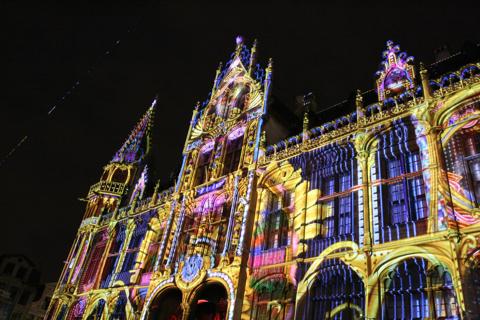
A balanced portfolio of permanent installations and temporary activations can maximize both long-term branding and short-term economic impact. Permanent displays, like Le Space Inspire, offer consistent tourism appeal, while festivals like Vivid Sydney generate seasonal buzz and community engagement. Video mapping sits at the intersection of culture, technology, and economic development, making it a key asset for cities aiming to thrive in the 24-hour economy.
*Asia-Pacific Immersive Entertainment Market Size & Share Analysis - Mordor Intelligence, accessed July 6, 2025,
https://www.mordorintelligence.com/industry-reports/asia-pacific-immersive-entertainment-market
Video mapping sits at the intersection of culture, technology, and economic development, making it a key asset for cities aiming to thrive in the 24-hour economy.
The creative possibilities for projection mapping are expanding rapidly. As many of our customer references show, I’ve seen the canvas evolve far beyond buildings. Trees, bridges, mountains, and even water surfaces are now being used to tell stories through light. This expansion of the medium allows for more immersive and site-specific experiences that resonate with local culture and geography.
Advancements in AI, real-time rendering, and interactive design are pushing the boundaries further. These technologies enable dynamic content that can adapt to audience input, environmental conditions, or even live data feeds—turning projection mapping into a living, responsive medium.
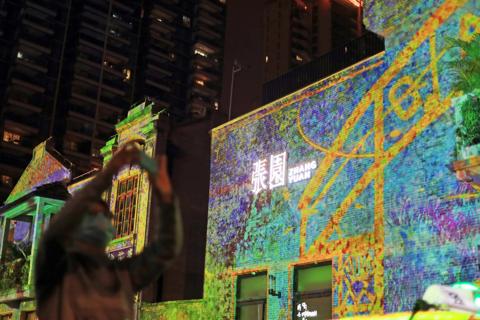
One example that stood out to me was the Light Festival at Dongdaemun Design Plaza used AI-generated visuals and Barco UDX projectors to transform the building’s curved silver exterior into a futuristic media art installation. The result was a dazzling, high-resolution spectacle that captivated audiences and reinforced Seoul’s image as a forward-thinking metropolis.
The most impactful projection mapping experiences are those that tell compelling stories. Whether it’s historical, cultural, or futuristic, content that resonates emotionally and intellectually will leave a lasting impression.
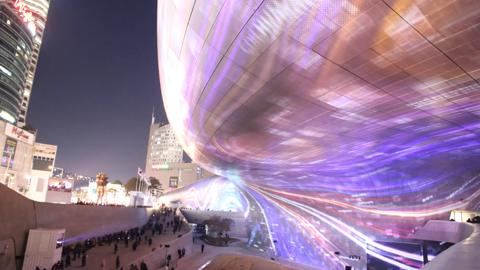
Across the globe, cities are embracing immersive entertainment as a way to revitalize public spaces and engage communities—but in Asia-Pacific, night-time activation has emerged as a particularly powerful driver of this trend. The night is no longer a time for rest – it’s a time for opportunity. Fueled by cultural tourism, urban density, and a vibrant festival culture, APAC cities are turning the night into a canvas for storytelling and economic stimulation.
By creating immersive, interactive, and emotionally engaging experiences after dark, cities can attract new visitors, extend dwell time, and build a distinctive nightscape identity. Once a niche artistic expression, video mapping is now a strategic tool for economic stimulation, urban revitalization, and tourism development. It transforms buildings, streets, and public spaces into dynamic canvases, captivating audiences with light, motion, and narrative.
But its impact goes far beyond aesthetics. These events generate more than just wow moments - they generate revenue. The technology brings a “vibe” to the city, encouraging overnight stays and boosting local economies. Events that feature projection mapping draw thousands of visitors, many of whom spend on food, lodging, retail, and transportation. Businesses located near projection sites report increased foot traffic and higher sales.
While night-time tourism is gaining traction worldwide, APAC’s proactive investment and creative ambition have positioned the region as a leader in using light-based experiences to energize the 24-hour economy. In Japan, festivals like the Art Triennales have reported economic impacts in the billions of yen—a testament to the power of immersive night-time experiences. With the right technology and creative vision, the night becomes a stage and the city becomes the star.
With the right technology and creative vision, the night becomes a stage and the city becomes the star.
To understand the impact of night-time activity, cities have traditionally relied on satellite-based Nighttime Lights (NTL) data. NTL data has proven to be a reliable proxy be a reliable proxy for human activity, helping monitor population concentrations and assess economic performance. Studies have consistently shown a strong correlation between NTL and key economic indicators like Gross Domestic Product (GDP).
While useful, NTL lacks the granularity needed to assess specific interventions like projection mapping. A more precise tool, Nighttime Street View Imagery (SVI), is emerging, offering street-level insights into lighting patterns and human activity. This data can help urban planners evaluate the true economic and social effects of immersive installations and will enable more targeted and effective design strategies.
The growth of video mapping in APAC is not just market-driven; it’s significantly bolstered by a supportive policy environment. Governments across the region, including Singapore, Japan, and China, have actively invested in the arts and culture sector through digitalization grants, capability development programs, and strategic funding initiatives.
This public investment de-risks private innovation, creating a virtuous cycle where immersive technologies like video mapping can flourish. As a result, cities are not only enhancing their cultural offerings but also building more resilient, inclusive, and future-ready urban environments.
Collaboration between governments, technology providers, cultural institutions, and local businesses is essential for funding, designing, and sustaining immersive initiatives.
The future of immersive entertainment is bright— both literally and figuratively. Looking ahead I believe projection mapping will continue to play a vital role in shaping the experience economy. With the right mix of technology, creativity, and collaboration, we can turn cities into living canvases that inspire, connect, and grow.
With Barco’s cutting-edge projection solutions powering many of these projection mappings, immersive entertainment is redefining how we experience cities, culture and connection. It’s an exciting time to be part of this movement.
Learn more about our projection mapping solutions here, or reach out to talk about future projects.