- No inter-screen gap, resulting in large viewing experience without interruption
- Great colors and performance
- Good horizontal viewing angles, so suited for camera movements
Videowände · Lesezeit 0 min.
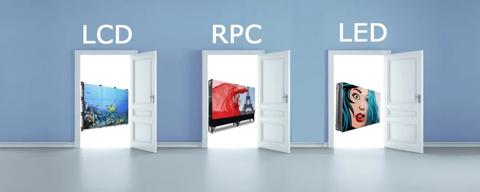
Some people look good on TV, others don’t. And the same goes for video walls. That is why television studios have some very specific requirements for their backdrops. So which of the three dominant technologies – direct view LED, LCD and rear-projection cubes (RPCs) – best answer these requirements? In this article, a follow-up to the one on control rooms and corporate lobbies, we highlight the most important parameters.
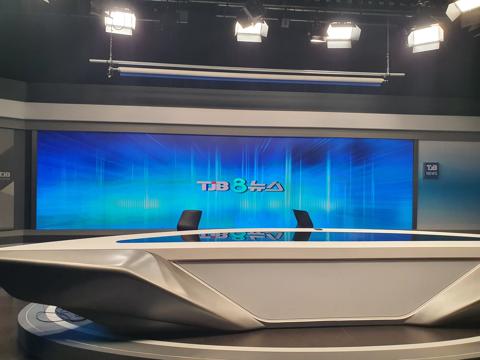
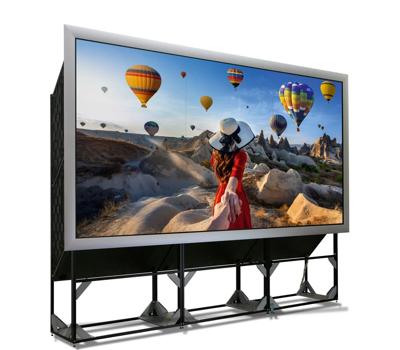
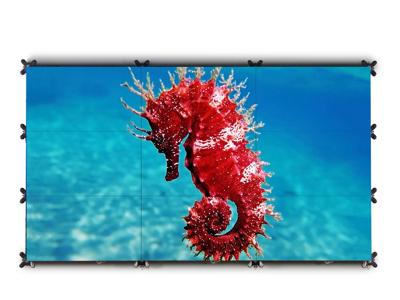
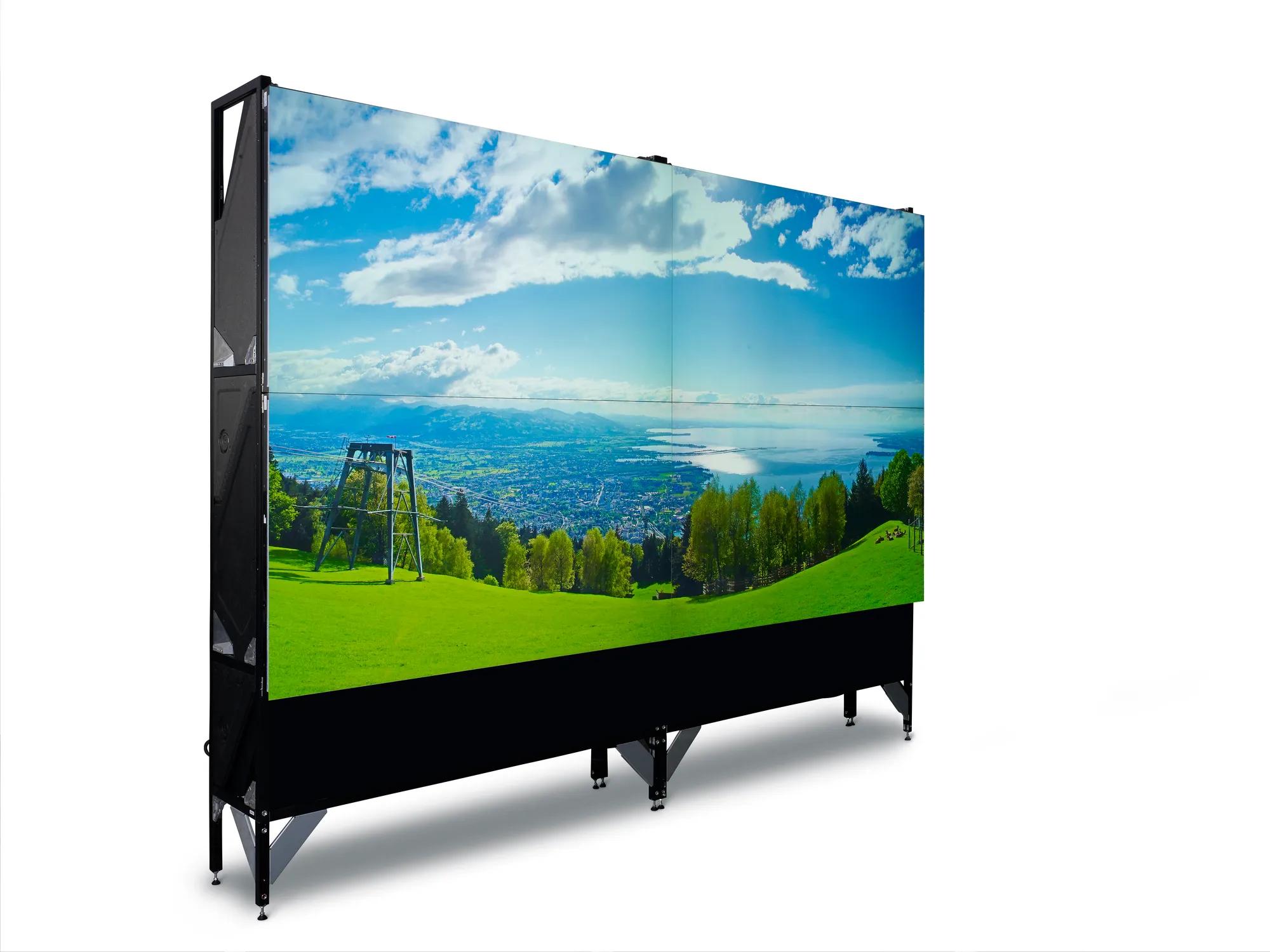
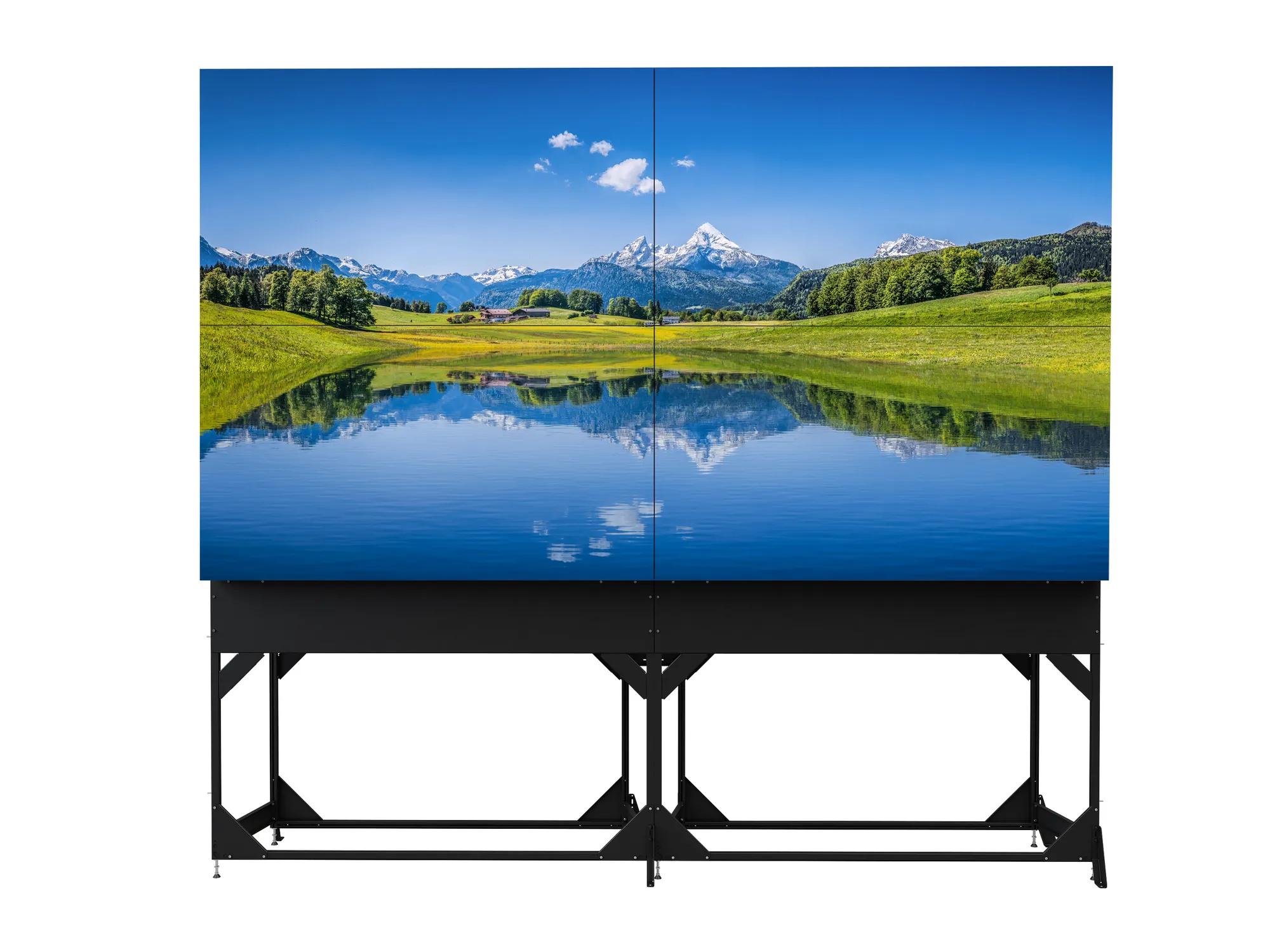
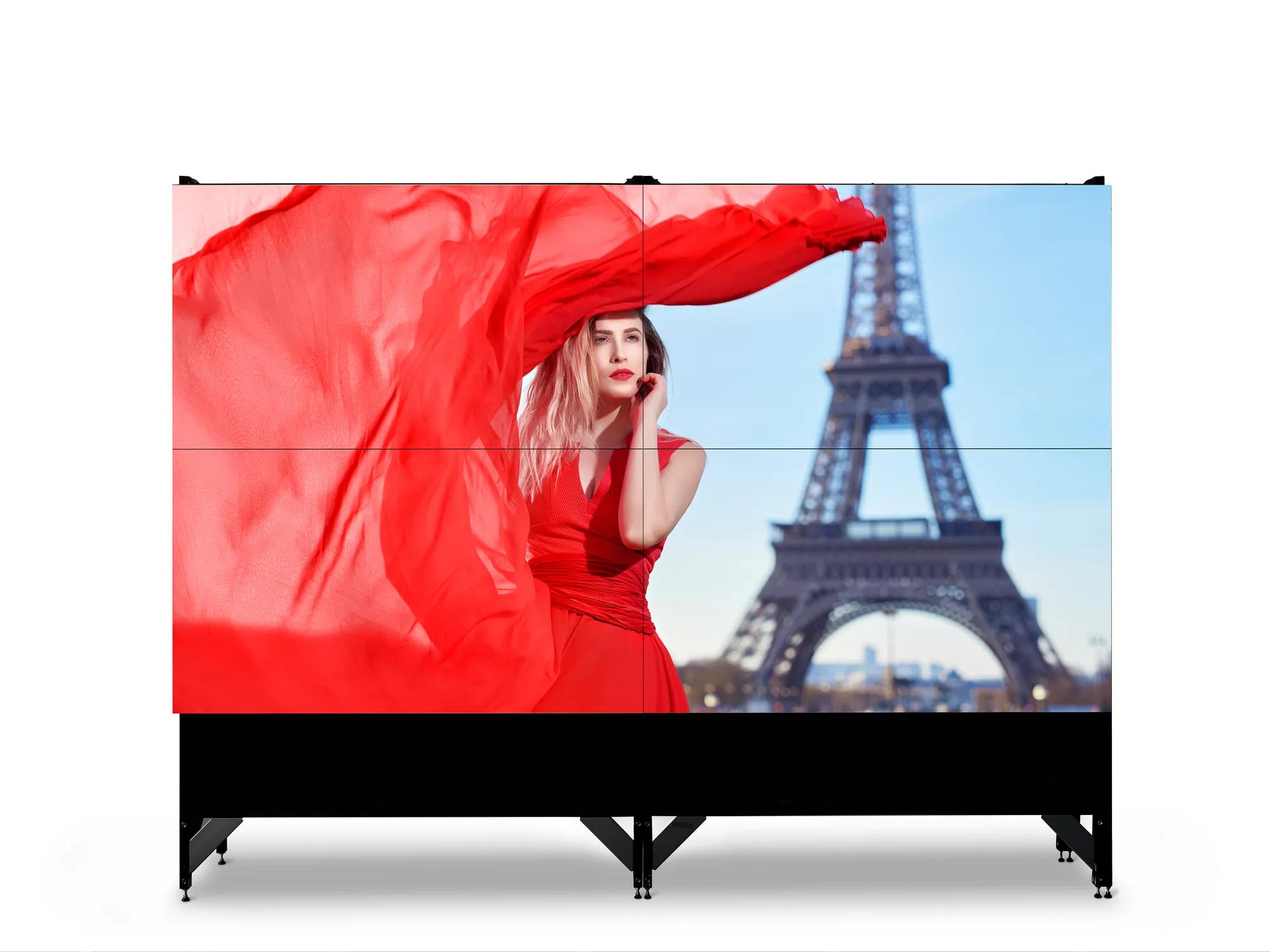
RPCs have a thin gap between individual cubes, creating a thin raster which is visible when the camera is filming in close to the backdrop. Most LCD video walls have a bezel surrounding each panel to keep the electronics in place, which creates a larger inter-screen gap. Barco UniSee, however, was developed to work without a real bezel, making it the LCD video wall with the smallest inter-screen gap in the market (see image).
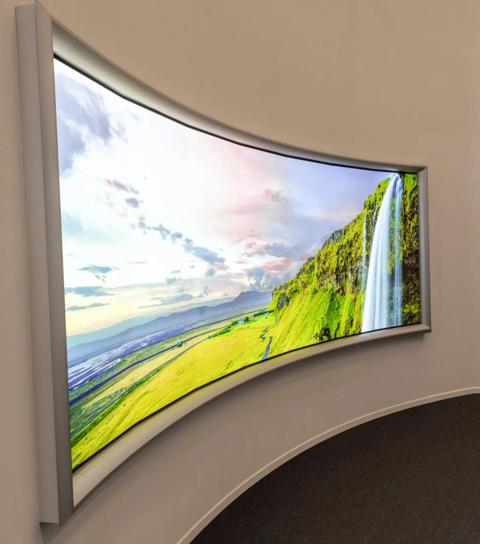
In television studios, lighting is of key importance and a lot of time and effort are spent to get it just right. Avoiding light reflections in the backdrop is a main element in this exercise. However, there is a big difference between the different technologies when it comes to reflections.
The glass display surface of LCD acts a bit like a mirror when a bright light shines upon it. The reflected light should never be directly in line with a filming camera. A clever studio setup will fix this. Direct view LED light reflection is more dependent of the total amount of ambient light than on the position of the lighting sources, since it scatters the light in all directions. This means that the position of the light point is only of minor importance. Less light in a studio therefore means better contrast.
Rear-projection cubes perform best when it comes to reflection, as the projection screen tends to absorb most of the lighting.
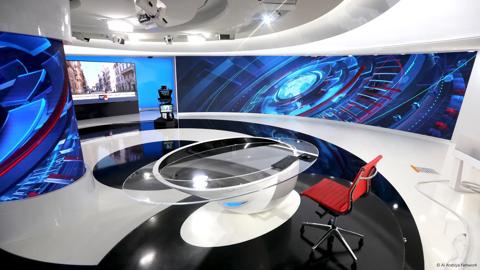
LCD, on the other hand, is the technology which is most easily equipped with a touch kit. It is thus perfect for use as an interactive wall, which is becoming increasingly popular in many news broadcasts and television shows.
Some people look good on TV, others don’t. The same goes for video walls. Fortunately, technology can be tweaked to improve its looks. Many video walls therefore offer the possibility to adjust the settings of the panels to optimize the on-screen appearance.
InfinipixTM, Barco’s proprietary LED image processing suite allows to easily set color temperature, gamma and color space to match with the content, without the need for any external calibration tools. Color temperature can match the lighting conditions in the studio (natural daylight or artificial light), and the gamma can be aligned with the iris of the camera, ensuring not to overshoot or undershoot the presenter.
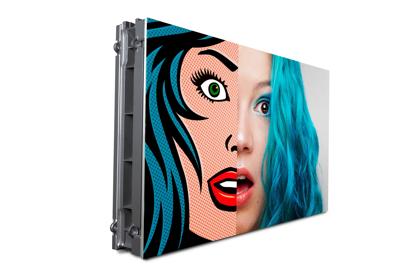
Additionally, every color can be tweaked as well, so the most realistic and dynamic colors can be shown. Within LED, the refresh rate is key to avoid any visible flickering on camera and in order to avoid moiré-effects for LED video walls, it is important to use panels with a fine pixel pitch.
RPCs as well offer a large degree of color tunability, resulting in brilliant color performance and image quality on camera. Other parameters, including the white point, are very precisely adjustable as well. This allows to perfectly tune the video wall to any circumstance.
Sense X, Barco’s unique automatic calibration system (which comes with all RPC and LCD video walls), makes sure that there are no brightness and color variations between the individual panels. In this way, the video wall will show a brilliantly consistent image over the complete canvas. For LED video walls, the brightness and color variations over time are negligible, and Barco ensures a perfect calibration upon installation and over the full lifetime. We do this by conducting calibration on an individual module level under controlled conditions to ensure the best and uniform results. You can read more about automatic calibration in this post.
Summarizing the main differences listed above, we can list the main characteristics of the different video wall technologies for television backdrops.