For each domain, a score is calculated that evaluates the product on several relevant topics. The assessment is performed against objective criteria that correlate with regulatory evolutions, industry and peer benchmarks, customer demands or voluntary eco-labels.
The details behind Barco's Ecoscoring system
Ecoscoring explained
By introducing the product Ecoscore, Barco offers an objective way to measure sustainability performance for all of its products.
The score of each domain reflects the potential of the product of having a low impact in that specific domain. The total product Ecoscore is abstracted into one final product score from the 4 domain scores.
The objective criteria are updated and validated on an annual basis to align with the latest standards. This approach drives continuous improvement and ensures that newly introduced Barco products bearing the Eco-label are recognized as best-in-class in ecodesign.
Currently, new products are evaluated using version 8 of the Ecoscoring tool.
How it works in practice
Here's an overview of how the Barco Ecoscoring methodology works.
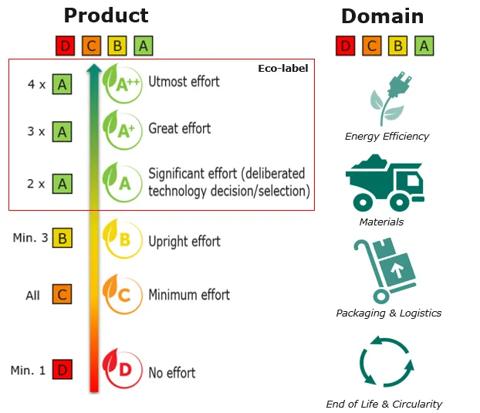
Scope of the methodology
During the evaluation, the following aspects are validated:

Increase efficiency transforming electrical energy to the product’s intended function; including standby, normal mode, off mode.

Reduce the use of (potentially) hazardous substances that are currently restricted or will be in the future. Improve the use of materials that are more environmentally friendly in terms of production or sourcing.

Optimize packaging design to minimize material use and logistic footprint, increasing recycled content, and enhancing the potential for reuse and recycling.

We follow the inner circles of the Ellen MacArthur Foundation butterfly model by focusing on: lifetime extension, connectivity and repair, spare part availability and ease of repair. Additionally, we strongly focus on modularity, upgradability and recyclability.
Sustainable by design
Barco’s Ecoscoring system is fully integrated in the product design process. At the start of the design phase, sustainable considerations need to be made to reach a high Ecoscore. Throughout the complete development process, R&D is challenged to incorporate ecodesign in its decision-making and to continuously improve sustainability of Barco products.
This is the scope of the Barco Ecoscoring system: all Barco-branded finished electronic products, either designed inhouse or outsourced to OEM suppliers. The following items are out of scope: modules, semi-finished products or products that are part of a larger system, non-Barco branded products and non-electronic products. Non-Barco branded electronic products can be scored on a voluntary basis to validate their sustainability performance.

Leading products with the Eco-label
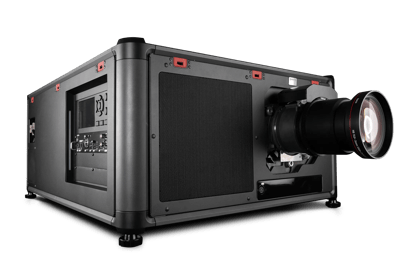
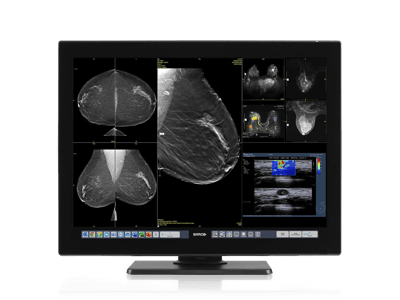

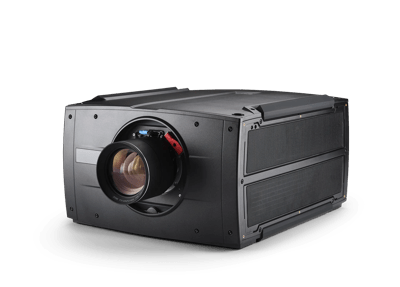
Barco Eco-label
Barco Eco-labeled products excel on at least two domains in the Ecoscoring methodology, provided that the performance of the other two domains are at least as good as industry benchmark.
If a product complies with current ecodesign regulations for one single domain the product must excel on the 3 other domains to obtain the Barco Eco-label. In any case, Barco Eco-labeled products are best in class when it comes to energy efficiency.
The score reflects the product’s performance at the time of launch or following a significant product update.
Value for our customers
Products that achieve the highest Ecoscore deliver value to our customers across multiple dimensions. These products typically offer a lower total cost of ownership (TCO), thanks to their best-in-class energy efficiency and extended lifespan. In addition, they are designed with modularity, upgradability, connectivity, and both reusability and recyclability in mind. In addition, Barco Eco-labeled products are also likely to meet the European taxonomy criteria.
ISO 14021 framework
The Barco Ecoscoring methodology is audited by Vinçotte nv, a certification firm with expertise in ecolabel validation. The framework used for validation is defined in ISO 14021:2016/Amd 1:2021 Environmental labels and declarations – Self-declared environmental claims (Type II environmental labeling). The latest assurance letter is available for consultation here.
Read more on sustainability
View all sustainability news
記事 · 読み終わるまでの時間:約3分 · 2026/09/11
Turning Barco’s heritage into impact for Engineers Without Borders
What started as an auction of vintage Barco radios and televisions turned into an opportunity to help communities around the world. Participants bid on pieces of Barco's history, joined Experience Center tours, and contributed through catering initiatives. Together, they raised funds that Barco matched, bringing the total donation to €10,000 for Engineers Without Borders Belgium.
記事 · 読み終わるまでの時間:約2分 · 2026/03/06
Opening doors to possibility: encouraging women in tech
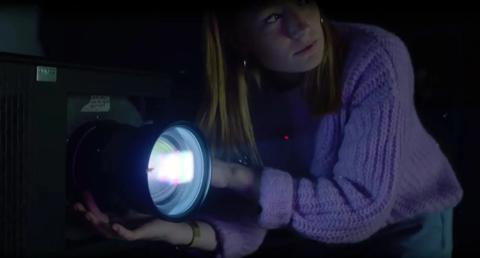
For International Women’s Day, we celebrate the women who design, build, and improve the technologies that shape our world. At Barco, we know great technology doesn’t happen in isolation. It’s shaped by people with different backgrounds, ideas, and ways of thinking, all working toward something meaningful. That’s why encouraging girls to explore STEM and consider a career in technology matters, not just for equality, but for innovation itself.
記事 · 読み終わるまでの時間:約2分 · 2026/02/18
Sustainability in AV: takeaways from the AVIXA advisory group at ISE
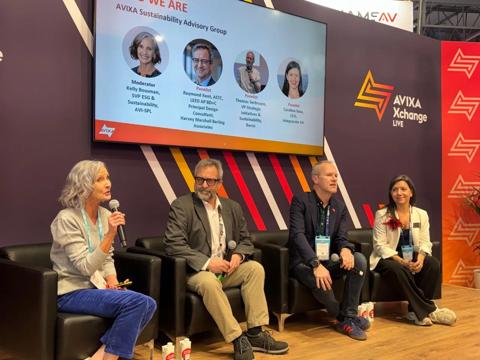
For the second year in a row, sustainability took center stage at ISE, as the AVIXA Sustainability Advisory Group hosted a dedicated session focused on turning ambition into action. Under the theme “Sustainability, from Seed to Strategy”, the panel discussion explored how organizations across the Pro AV ecosystem can move from first ideas to embedded, long-term practices.