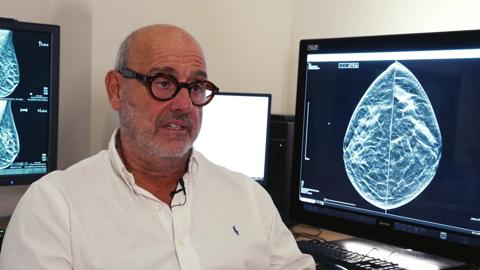
The fact that I don’t need to split, scroll, and magnify through the images means that it shortens the workflow.
Budapest, Hungary · 2025
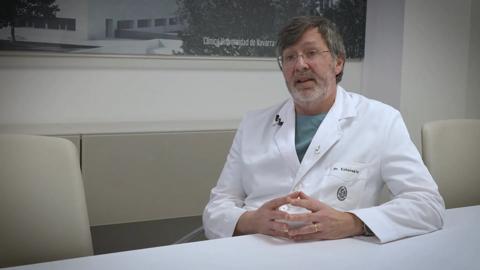
Professor Gábor Forrai, a seasoned radiologist based in Budapest, Hungary, has dedicated over three decades to advancing breast imaging. With 35 years of experience in mammography, 28 years in breast MRI, and a leadership role as former president of the European Society of Breast Imaging (EUSOBI), Professor Forrai is a respected voice in the field. His work spans university hospitals, state institutions, and private practices, where he leads multidisciplinary teams and contributes to international education.
Looks like you haven't accepted cookies
Activate performance cookies to watch this video.
Barco solutions:
Key benefits:
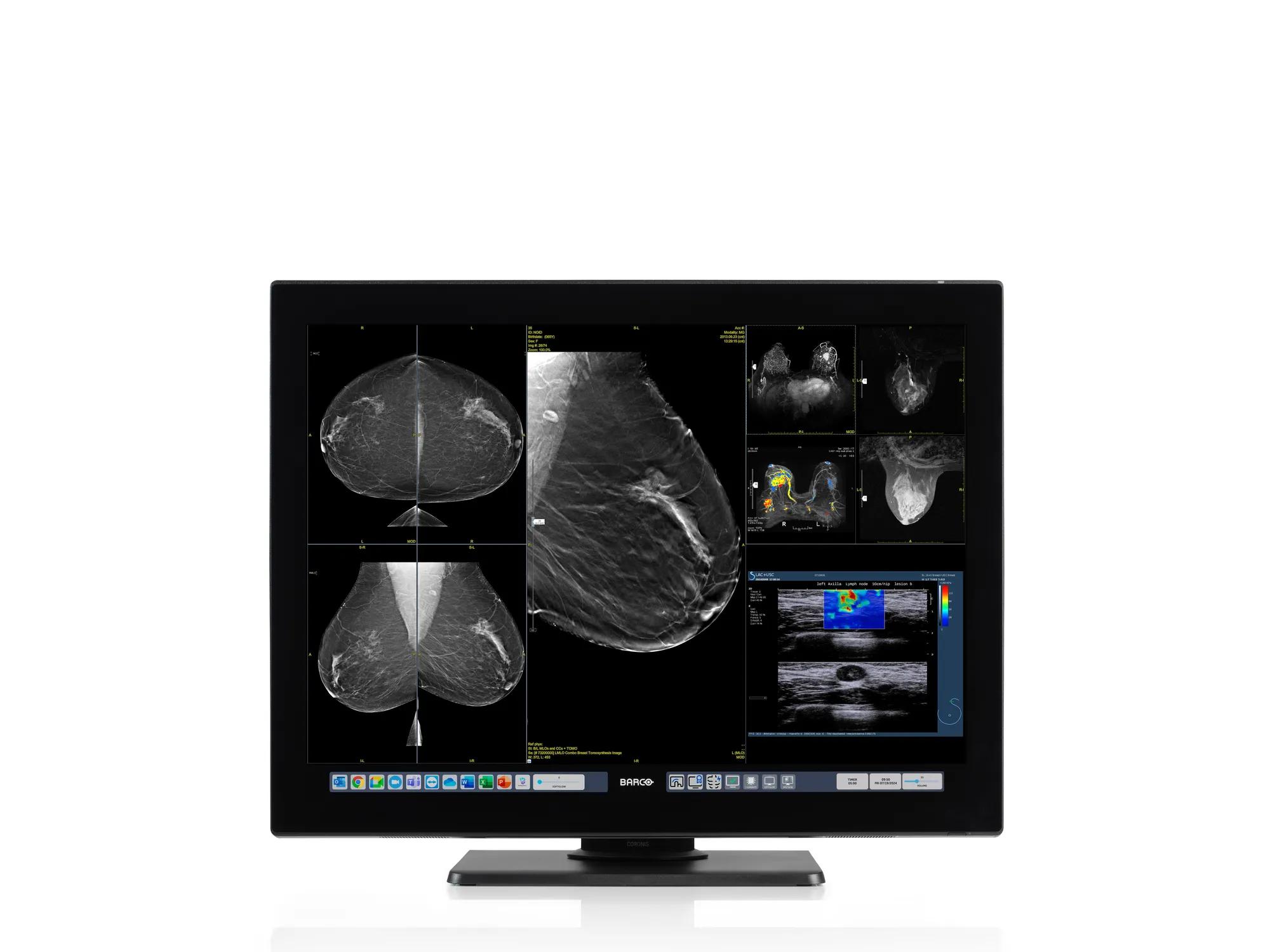
When Professor Forrai received the Barco Coronis OneLook display for testing, he recognized its potential to transform diagnostic workflows. “The most important features of this new Barco Coronis OneLook display are the size, the resolution, and the contrast brightness,” he notes. The 32-megapixel monitor offers a big leap from previous models, enabling radiologists to view full-size mammography images without the need for magnification or image splitting.
One of the standout benefits of the Coronis OneLook is its ability to help streamline the diagnostic process. With its expansive screen and high resolution, radiologists can view entire image sets at once, reducing the need to scroll or zoom.
The fact that I don’t need to split, scroll, and magnify through the images means that it shortens the workflow.
This efficiency is particularly valuable in high-volume clinical environments, where time and accuracy are critical. The monitor’s brightness also allows for comfortable ambient lighting, improving working conditions and reducing eye fatigue—especially during long shifts.
Beyond diagnostics, the Coronis OneLook can play a vital role in patient engagement and interdisciplinary teamwork. Professor Forrai and his team frequently discuss imaging results directly with patients, using the display to visually explain findings and treatment options. “Some patients are very interested,” he says. “It’s advantageous to explain to them what is happening with their health.”
The monitor also facilitates collaboration with surgeons, pathologists, and oncologists during multidisciplinary team (MDT) meetings. “We sit in a room and look at the same display. That’s important for understanding between professions,” he emphasizes.
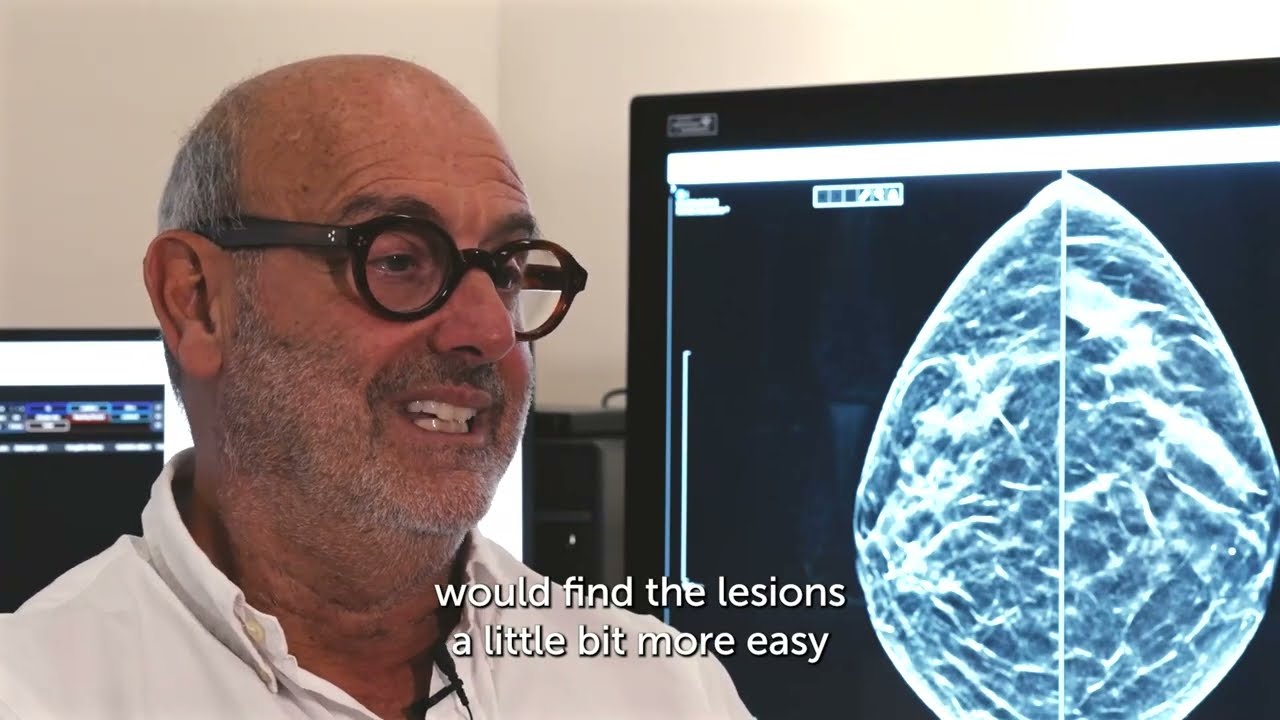
Professor Forrai believes that advanced display technology like the Coronis OneLook can be a powerful educational tool. For radiologists in training, the monitor’s high contrast and resolution make it easier to detect subtle features such as microcalcifications. “For radiologists who are starting their career and don’t have such a huge experience, this shocking high contrast is a big advantage,” he says. “They would pick the details more easily than with a low contrast image.”
He also advocates for integrating technical education into radiology training programs. “Radiology is a kind of a technical sport,” he remarks. “We need to inform young radiologists about DICOM, curves, monitors, and technical details to better use the equipment provided to us.”
Looking ahead, Professor Forrai sees the Coronis OneLook as a benchmark for future developments in radiology. While he acknowledges that monitor size may not increase indefinitely due to human viewing limitations, he appreciates the immersive experience the current model offers. “You can concentrate on diagnostics better because you don’t see anything else in your view than the monitor itself,” he says.
He also highlights the importance of features like in-built ambient desk and wall lights, which help reduce eye strain by adding soft ambient light to the monitor’s surroundings. “Your eye doesn’t need to adapt, which is more beneficial for your vision,” he explains.
After weeks of testing, Professor Forrai concludes that the Coronis OneLook offers a clear advantage in terms of image quality, workflow efficiency, and user comfort. “It’s a great monitor. We see all the details we need—or even more,” he says.
I would recommend it to all breast radiologists and young colleagues to get used to the high contrast. It’s even more consistent and sharp.