Seeing a better future for mammography
Healthcare · Breast cancer · 2 min read
We’ve come a long way in breast cancer diagnosis. Rates of mammography screenings have increased by nearly 40% since 1987 and over 80% of women over 50 in the United States are now screened regularly for breast cancer. However, with an aging population it’s evident that radiologists, as well as healthcare systems, will need to find more efficient ways of screening an ever-increasing number of women.
What part can technology play?
According to UK medical journal The Lancet, 93% of mammograms requiring additional investigation showed false positives. Not only does this cause undue anxiety and stress for the women involved, it also results in unnecessary call backs and additional screening – all of which increases the burden on healthcare providers.
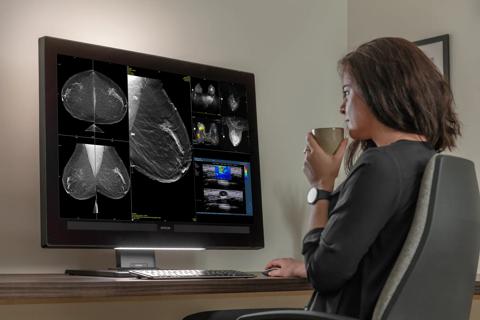
Decreasing this burden means increasing efficiency – and this can be achieved through confident and accurate diagnoses, earlier and more often. How can we achieve better diagnosis? By working with more advanced visualizations that will reveal the tiniest of lesions. Dr Laszlo Tabar, Course Director of Mammography Education and leading expert in mammography, says “The early phase of breast cancer sometimes – many times – doesn’t show a very characteristic, stellate appearance. There will be very subtle changes, tiny calcifications, architectural distortions, and we must be able to find them."
Achieving the desired image quality comes down to several key factors, including increased spatial resolution, contrast and brightness, all ultimately leading to radiologists making more confident first-time diagnoses.
Towards a solution
Improving mammography demands a multi-faceted approach – technology must be enhanced to support more accurate screening and improve the training and experience of radiologists.
And let’s not forget that mammography is not the only tool used to detect breast cancer. Breast radiologists also frequently use breast MRI, a tool known for its impressive ability to detect small tumors in their earliest stages, as well as breast ultrasound scans, often used on denser breast tissue or to check abnormal mammograms, due to their ability to pick up more detailed information.
With all these screening options, it is more important than ever to ensure the highest image quality of our screens, as well as improve comfort and ease for radiologists and their ever increasing workloads.