
Key takeaways:
- In Microsoft Teams Rooms, audio quality directly impacts AI features such as speaker tracking, transcription, and live captioning.
- Meeting rooms must deliver consistent, certified performance across varied room types to support scalable hybrid work.
- Flexible spaces require modular, interoperable systems that reduce deployment risk for IT and integrators.
- AI-driven features only perform as well as the audio capture that feeds them.
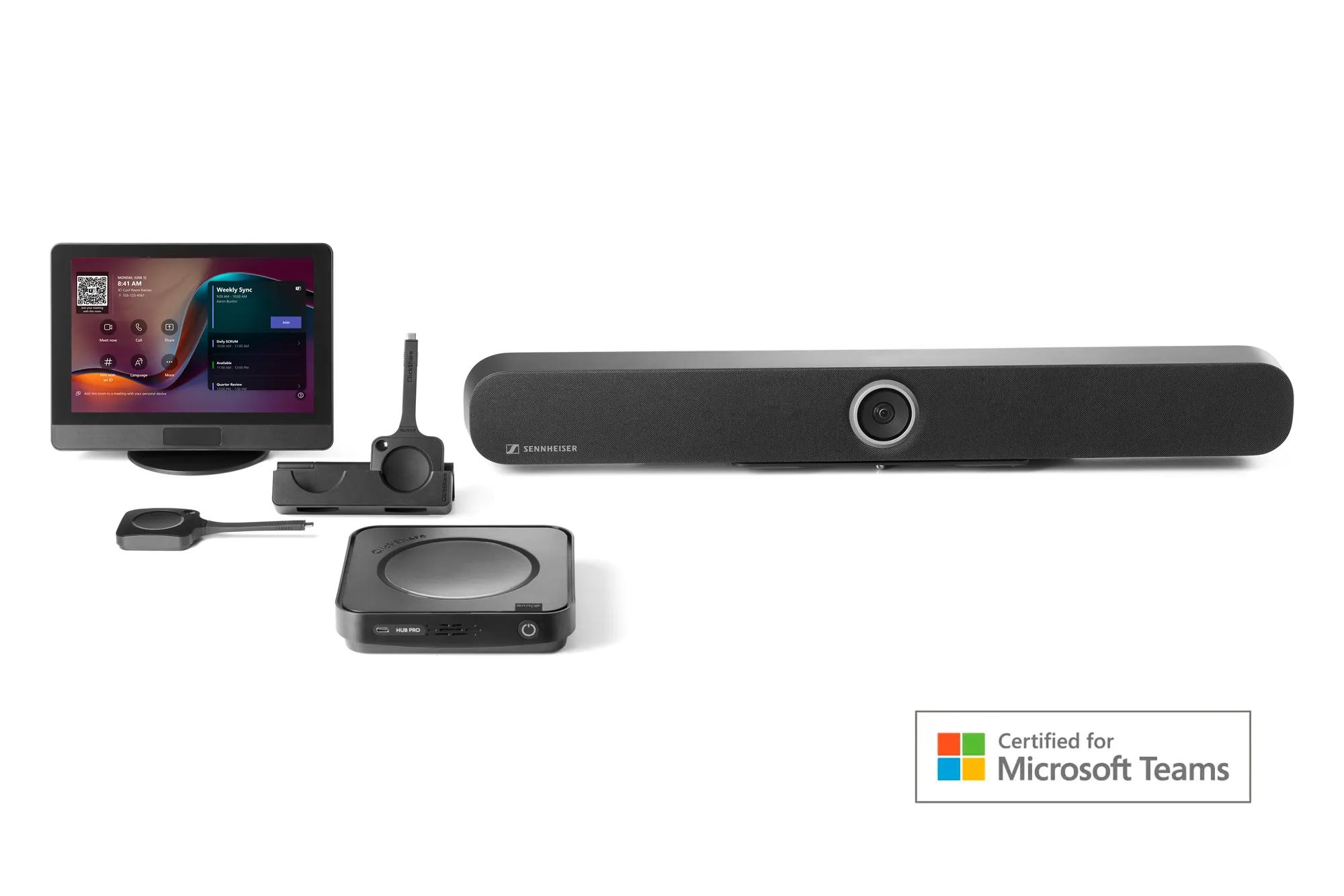
- Certified ecosystem collaborations, such as the ClickShare Hub and TeamConnect Bar solution built on the Microsoft Device Ecosystem Platform, reduce friction, and increase predictability.

1. Audio becomes foundational to AI-enabled meeting rooms
Hybrid work and hybrid learning have made reliable, inclusive communication essential. Yet many organizations still struggle with uneven audio quality, complex setups, and the challenge of managing flexible spaces at scale. Remote participants can feel like observers rather than contributors, while IT teams are under pressure to deliver consistent performance across a wide variety of room types.
As collaboration platforms evolve, audio quality is proving to be foundational. In Microsoft Teams Rooms, capabilities such as intelligent framing, speaker tracking, transcription, and live captioning rely heavily on clean, consistent audio capture. Without it, AI features underperform and user trust erodes.
Through ongoing certification for Teams Rooms, Sennheiser helps ensure seamless integration and predictable performance, giving organizations confidence that room systems will perform as intended from day one. When everyone can be heard clearly, hybrid collaboration stops feeling remote and starts feeling real.
2. Flexible spaces demand scalable, interoperable systems
Meeting spaces are no longer single-purpose environments. A room may host a quick team check-in in the morning and a hybrid workshop in the afternoon. In education, lecture halls and classrooms are continually adapted to meet changing formats and class sizes.
Supporting this flexibility requires more than individual devices. It requires interoperable systems that can scale across small, medium, and large rooms while maintaining consistent performance.
Certified ecosystem collaborations, such as the ClickShare Hub and TeamConnect Bar solution built on the Microsoft Device Ecosystem Platform, demonstrate how validated combinations reduce deployment risk and simplify standardization across estates. When room components are designed to work together seamlessly, technology fades into the background and collaboration feels natural.
3. AI moves from enhancement to expectation
AI is increasingly helping to make hybrid meetings more natural and inclusive. Intelligent beamforming, noise reduction, and speech enhancement improve clarity and ensure balanced participation between in-room and remote attendees. These capabilities are embedded in certified collaboration solutions such as Sennheiser’s TeamConnect Bars, enabling consistent performance across modern meeting spaces.
In larger environments, Intelligent Noise Control helps distinguish speech from constant background sounds, improving the performance of camera tracking, transcription, and captioning tools in Microsoft Teams Rooms and Zoom Rooms.
Clean audio at the source directly influences how well AI-driven capabilities perform. As AI becomes embedded in collaboration workflows, the quality of capture becomes critical to measurable outcomes.
4. The next evolution: adaptive and accountable collaboration systems
The next stage of innovation will focus on meeting experiences that are more adaptive and intelligent, automatically responding to room acoustics and participant behavior while providing proactive diagnostics for IT teams.
As these systems evolve, organizations will look beyond feature lists and toward measurable outcomes:
- Reliability
- Usability
- Reduced friction
Ultimately, the goal is not more automation, but better human interaction. Intelligent systems should support collaboration quietly and consistently, allowing people to focus on the conversation rather than the technology.
Collaboration should feel effortless
As hybrid work continues to evolve, organizations need collaboration environments that are reliable, interoperable, and easy to manage at scale. Audio plays a central role in this equation, ensuring that AI-driven features, room systems, and collaboration platforms perform as intended.
Ecosystem partnerships, such as the certified ClickShare Hub and TeamConnect Bar solution built on the Microsoft Device Ecosystem Platform, show how validated combinations can reduce complexity and improve consistency across meeting spaces. When systems are designed to work together seamlessly, people can simply listen, speak, and understand one another. Communication feels natural, and technology supports the experience rather than distracting from it.

Related products
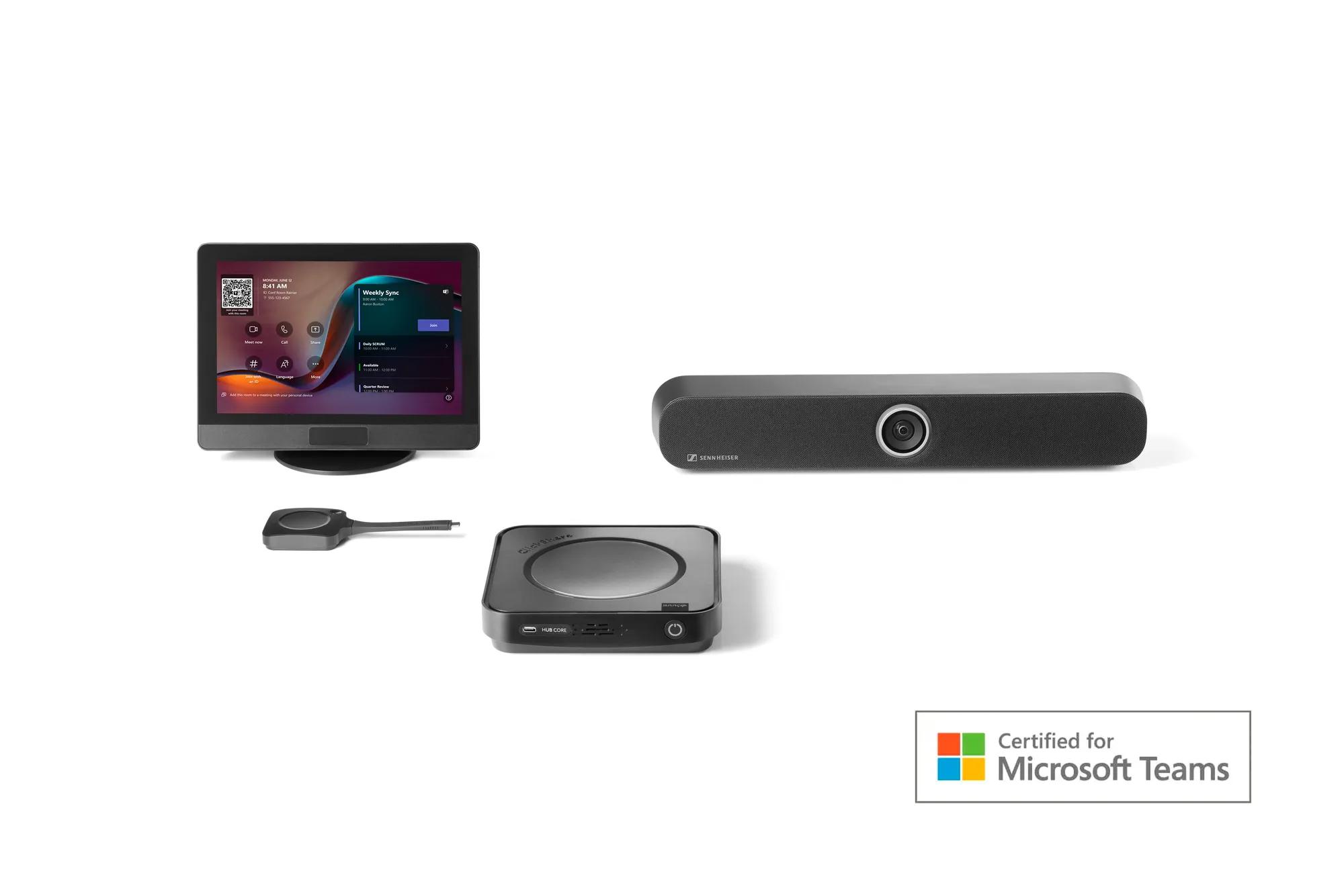
ClickShare Hub Core + Sennheiser TeamConnect Bar S room system