Everyone was just sitting there commenting, [the QDX] is a game changer for us. The display was cinematic. The brightness, clarity, sharpness, detail, and depth were excellent and the blacks were stunning. It’s restored a lot of people’s confidence in projection.
Last updated:
Raising the standard: Melbourne Convention and Exhibition Centre & Nyaal Banyul Geelong Convention and Event Centre
Australia · 2026
Two of Melbourne’s premier convention venues, one newly built, one upgrading its technology, have independently arrived at the same answer for projection. Find out how Barco Visualization solutions make these venues shine.
© This case study is based on the article originally published in the June 2026 edition of the InAVate APAC magazine.
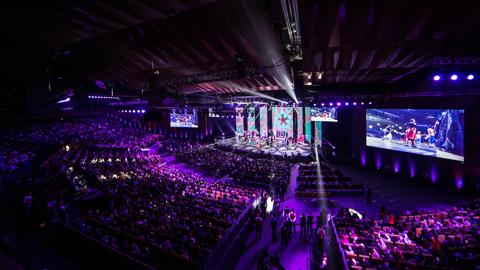
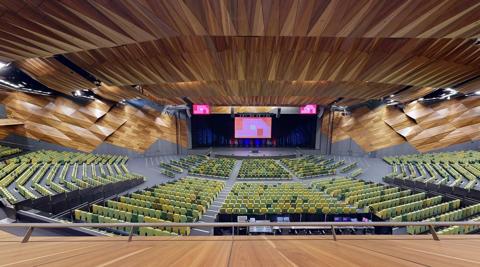
W hen a new convention centre is built from the ground up, technology decisions are a statement of intent. When an established venue invests in a significant tech upgrade, it signals a commitment to ensuring quality experience. Recently, two pre eminent Australian venues made their respective statements.
Melbourne Convention and Exhibition Centre (MCEC) completed a display technology refresh across its Plenary and Nyaal Banyul Geelong Convention and Event Centre, a brand-new venue, will open its doors to the public with projection selected as the display of choice. Both venues, through independent evaluation processes, converged on Barco Visualization solutions for projection and screen management.
For Nyaal Banyul, the projection brief was exacting. Michael Walker, senior manager – audio visual at Nyaal Banyul Geelong Convention and Event Centre, explains: “Projection was deliberately removed from the broader builder-led procurement process because of how central it is to customer outcomes.”
The venue will host a significant volume of exhibitions, conferences and events, where exceptional image quality and display clarity are paramount. Colour accuracy and resolution are also critical requirements and non-negotiable performance metrics.
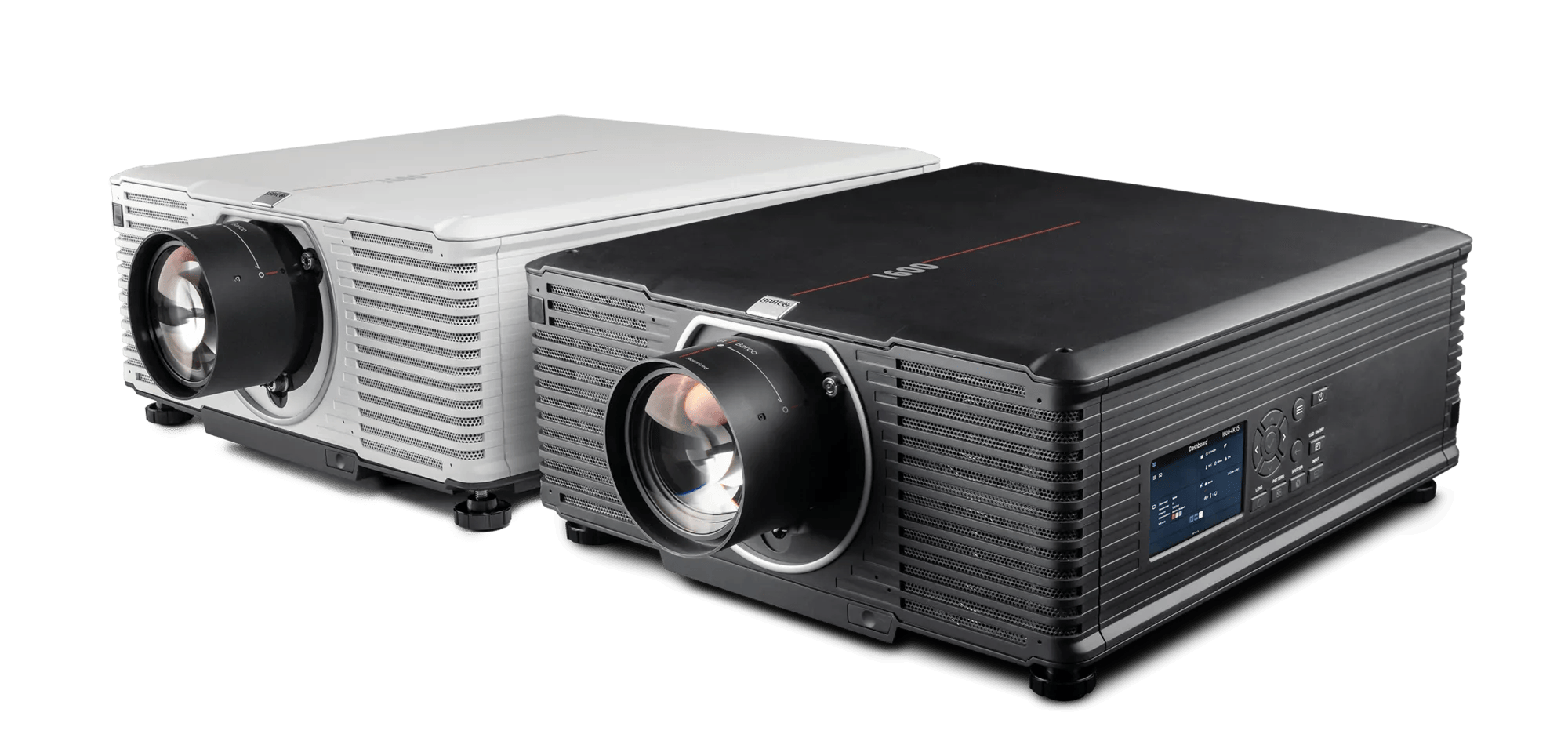
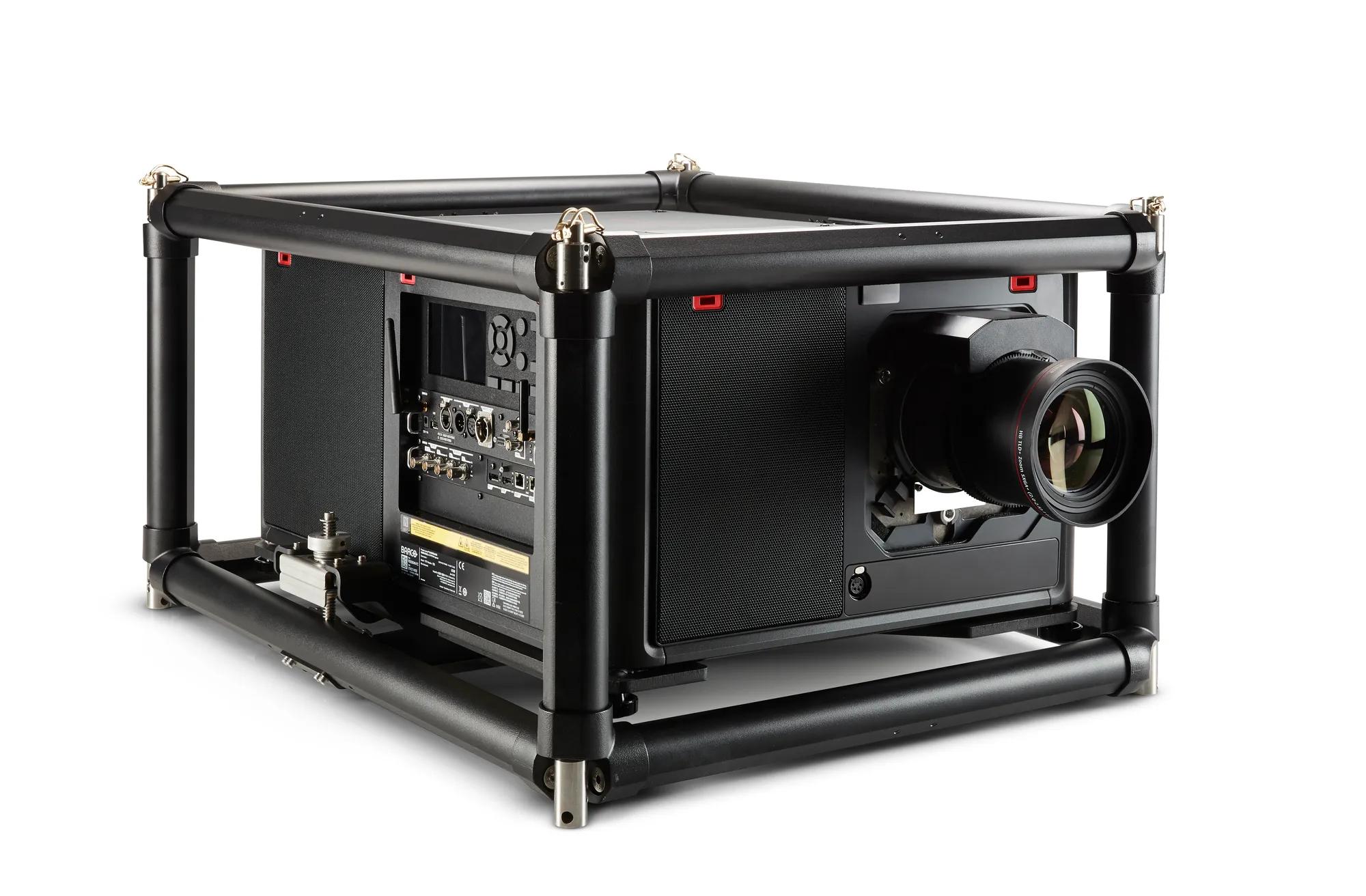
Nyaal Banyul issued an expression of interest calling for large-format laser projectors above 30,000 lumens alongside seven to 10 smaller units for breakout spaces. All shortlisted products were evaluated against a standardised slide pack and video toolset, testing colour reproduction, skin tone accuracy, scaling artefacts, and ghosting. The result was the selection of Barco UDM-4K30 projectors for Delama Event Space and Barco I600-4K15 projectors for the meeting rooms. Barco Encore3 processors provide vision and signal switching across events.
At MCEC, the scope was guided by experience. The venue knew its environment intimately. David Strangio, head of audio visual MCEC, reflects: “We needed a solution that would fit within existing custom projector housing boxes, work with legacy fibre infrastructure, and perform consistently across rooms that turn over multiple times in a single week with constantly shifting lighting states. Your challenges start to define your scope, and then you start to see how the market solutions compare to how your scope is lining up.”
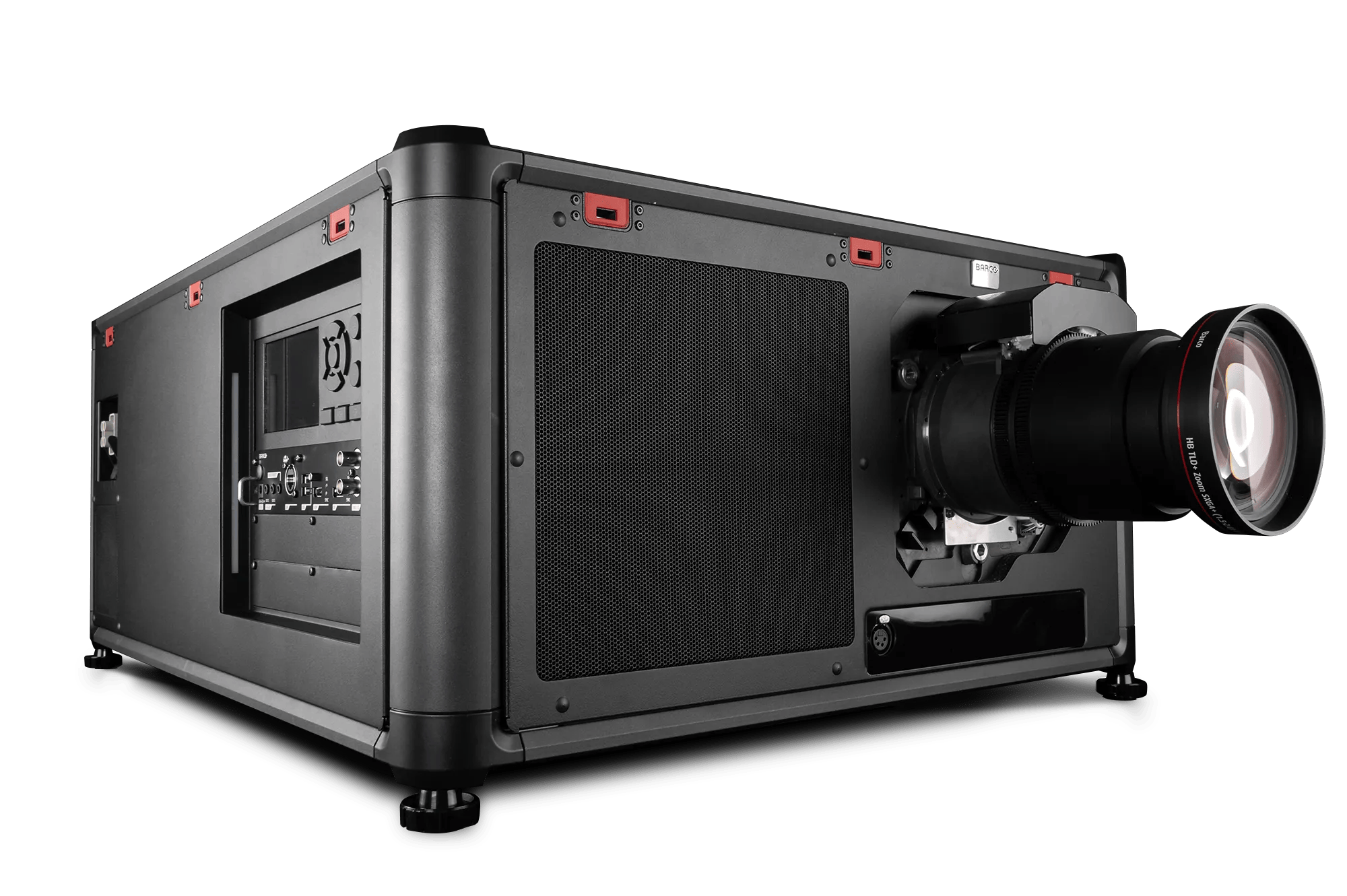
MCEC’s evaluation led them to select the Barco QDX-N4K45 projector, a native 4K UHD, 3-chip DLP laser phosphor designed to excel in large venue applications, for the Plenary.
Lee Tran, - country lead, Immersive Experience at Barco Australia, who leads Barco’s engagement with both venues, is candid about what competitive shootouts mean for the brand. He says: “A lot of vendors have good products. But we know our product and we know what it can do. It was instrumental that we were given the chance to have a fair comparison with every other vendor out there.” Real-world results, not brochures or spec sheets, made the difference visible.
The MCEC installation was handled by Diversified in the capacity of system integrator. Replacing the existing projector units inside purpose-built, elevated housing boxes presented a genuine retrofit challenge. The QDX units are lighter, and this made installation easier. But they are slightly wider in footprint, requiring custom metal feet on the mounting plate. In one of the three plenaries a minor aperture adjustment was needed to accommodate the new lens offset.
Protective glass panes over the projection apertures were removed for both safety and ventilation reasons and the QDX units proved quiet enough that airflow management became a greater concern than noise.
Daniel Woodward, operations manager - Victoria from Diversified, says: “Alignment was notably straightforward: where the previous projectors required significant physical tilt, QDX’s lens shift handled the geometry entirely. Units arrived pre-QA’d and firmware-updated from Barco’s Melbourne facility, and this streamlined the deployment process.” The full upgrade across Plenary 1-3 was completed within a week, with a live event running mid-installation.
The teams at both venues speak with consistent energy when describing the projectors in action. At MCEC, initial testing produced a memorable moment: the team powered the venue’s 50-ft screen configuration, typically requiring a three-projector blend, with a single QDX unit.
Strangio details: “We zoomed out and it fit perfectly. Everyone was just sitting there commenting, this is a game changer for us. The display was cinematic. The brightness, clarity, sharpness, detail, and depth were excellent and the blacks were stunning. It’s restored a lot of people’s confidence in projection.”
At Nyaal Banyul, four UDMs are running simultaneously in Delama Event Space as final handover processes conclude. In a development no one had planned for, Walker’s team has been carrying out projector alignment under full working lights — 500 lux at floor level. Walker says: “The brightness, punch, and sharpness of these projectors is just phenomenal. Even hanging openly on truss without housing enclosures, there are no perceptible fan noise issues in even the quietest room conditions.”
The decision to commit to projection — rather than pivot to LED wall technology — was deliberate at both venues. For Nyaal Banyul, extensive customer interviews during the building’s development consistently returned to flexibility. Walker explains: “Should we need to move screen positions forwards or backwards, reduce the image surface or expand it, we can do that on a projector with optics. With an LED wall, you have to take it apart, move it, put it back up again.” A Barco projector on a motorised truss, with the right lens, adapts on the fly.
the Strangio echoes the logic: “Screen sizes and bar configurations change constantly at MCEC. Roof loading constrains large LED installations and setup and pack-down time. With projection there is a significant operational saving. It was never really a question of ‘are we doing away with projection?’. It was about how do we continually enhance what we already offer?”
Both venues also point to the Australian market’s distinctive inclusive-service model — technology, food, and event services delivered in-house — as an outcome that projection fits within seamlessly.
Tran puts the broader picture plainly: “Barco is one component of a large solution. The partnerships — with Diversified on the MCEC integration, and with Nyaal Banyul’s team and on-site integrators in Geelong — are what make the technology perform in the real world.”
For the two convention venues at very different points in their lifecycle, the conclusion is the same: when the lights come on and the audience arrives, Barco projection delivers.
Products used for this solution
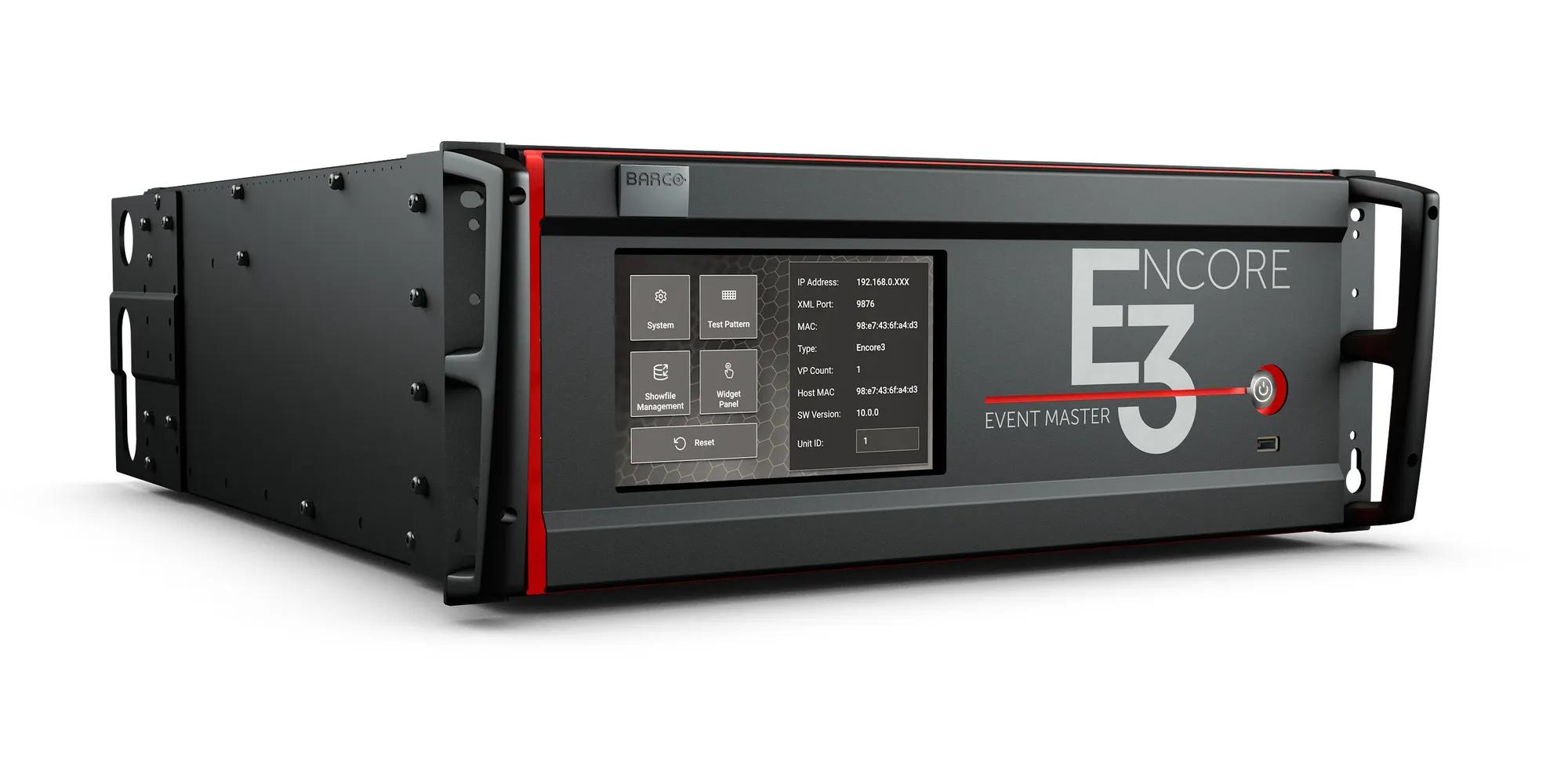
Image processing
ENCORE3
World’s most versatile Screen Management System
Discover
Simulation projectors
I600-4K15
14,000 ISO lumen, 4K UHD, single-chip laser phosphor projector
Discover
Rental projectors
QDX-N4K45
40,000 lumens, native 4K UHD, 3-chip DLP laser phosphor large venue projector
Discover
Installation projectors
UDM-4K30
27,000 lumens, 4K UHD, 3-chip DLP digital large venue projector
Discover
Related customer stories

Previous
of
...
Next