
Article · 4 min read · Jan 27, 2026
The cinema industry relies on common standards to ensure films are presented consistently, regardless of where they are shown. These standards are defined by Digital Cinema Initiatives (DCI), an organization established by major Hollywood studios to define requirements for image quality, security, playback reliability, and content protection across the digital cinema ecosystem.
As display technologies have evolved, so too has the DCI compliance framework. Today, DCI certification encompasses both traditional projection systems and Direct View LED displays, providing a common foundation for digital cinema presentation.
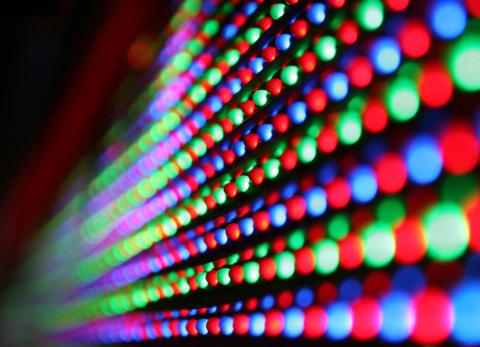
Direct View LED introduced a fundamentally different approach to cinema presentation. Unlike projection systems, LED displays emit light directly from millions of individual pixels on the screen surface itself.
This emissive architecture enables unique performance characteristics, including:
As cinema LED technology began entering commercial theaters, the DCI Compliance Test Plan did not yet include the dedicated SDR Direct View and HDR Direct View certification pathways available today.
One striking fact about cinematic LED's rise is that the technology reached commercial cinemas before DCI had built dedicated test sequences for it.
When the first Direct View LED displays entered commercial cinemas, manufacturers seeking DCI approval relied on the established projection-based compliance framework that was available at the time.
This projection-based pathway enabled Direct View LED technology to enter the market while maintaining DCI compliance, years before Direct View-specific compliance testing was introduced.
In July 2023, DCI approved CTP 1.4, introducing dedicated Direct View Display test sequences and Direct View-specific image-performance testing into the Compliance Test Plan.
For the first time, DCI established dedicated Direct View certification pathways for:
This represented an important evolution of the DCI framework. Rather than replacing projection-based certification, DCI expanded the Compliance Test Plan to address the unique characteristics of emissive display technology while maintaining the industry's established compliance foundation.
DCI now classifies these pre-CTP 1.4 approvals as components of SDR Projection Systems because the corresponding Direct View-specific certification pathways and test sequences had not yet been introduced. See DCI's Direct View as SDR Projection category.
DCI also encourages manufacturers whose products were certified under earlier Compliance Test Plan versions to undergo the additional image-performance testing introduced in CTP 1.4.
SDR Projection is the original DCI certification category developed for projection-based cinema systems.
Before Direct View-specific certification pathways were introduced, LED displays in cinema that achieved DCI approval were evaluated using this projection-based compliance framework. DCI now classifies these pre-CTP 1.4 approvals as components of SDR Projection Systems because the corresponding Direct View-specific certification pathways and test sequences had not yet been introduced. This classification reflects the test sequence performed rather than the underlying capabilities of the display itself. SDR cinema continues to use a traditional gamma-based transfer function originally developed for Standard Dynamic Range content.
Reference image performance targets for traditional DCI SDR cinema include:
Introduced with CTP 1.4, SDR Direct View became the first DCI certification category specifically developed for Direct View displays.
While SDR Direct View maintains the traditional DCI SDR presentation target of 48 nits peak white, it introduces Direct View-specific evaluation methods for characteristics that are unique to emissive display technology.
The goal is not to increase brightness beyond traditional SDR cinema, but to ensure that Direct View displays are evaluated according to the unique characteristics of LED display architecture.
Examples of image-quality characteristics evaluated under SDR Direct View certification include:
Unlike projection systems, Direct View displays generate black by controlling millions of individual pixels. CTP 1.4 therefore introduced dedicated black-level testing, including SDR Inactive Black Level, to verify the performance and consistency of inactive pixels across the display surface.
HDR standards build upon the Direct View testing framework introduced in CTP 1.4 and adds requirements for High Dynamic Range cinema presentation. HDR adopts the SMPTE ST 2084 (PQ) transfer function, which was specifically developed for High Dynamic Range imaging and allows a more accurate representation of a wider luminance range, from near-black shadow detail to bright highlights.
DCI's HDR research identified key image-performance targets that define a compelling HDR cinema experience for projection and Direct View, including:
Direct View HDR certification then verifies that these performance targets are reproduced accurately throughout the luminance range, including:
Unlike SDR Direct View's inactive-black evaluation, the 0.005-nit black level target is part of DCI's HDR image-performance model and contributes directly to the expanded dynamic range required for HDR presentation.
Precise EOTF tracking is critical because HDR performance is determined not only by peak brightness and black level, but also by how accurately the display reproduces every luminance level between them. Accurate ST 2084 (PQ) tracking helps ensure HDR content is reproduced as intended by filmmakers and colorists throughout the full luminance range, from near-black shadow detail to peak highlights.
| Category | SDR Projection | SDR Direct View LED | HDR |
|---|---|---|---|
| Intended display technology | Projection | Direct View displays | Projection & Direct View displays |
| Peak white luminance | 48 nits | 48 nits | 300 nits |
| Black level target | 0.024 nits | 0.024 nits | 0.005 nits |
| Direct View-specific tests | No | Yes | Yes |
| HDR testing | No | No | Yes |
| ST 2084 EOTF evaluation | No | No | Yes |
The evolution from SDR Projection to SDR Direct View and HDR Direct View reflects the evolution of cinema display technology itself.
Since 2005, projection-based DCI certification has provided the foundation for digital cinema worldwide and continues to be the dominant exhibition standard across commercial theaters.
As Direct View LED technology emerged, DCI expanded its certification framework to address the unique characteristics of emissive displays. This allows projection and Direct View technologies to be evaluated according to the requirements most relevant to their respective architectures.
Today, audiences increasingly seek cinema experiences with deeper blacks, brighter highlights, greater realism, and improved preservation of creative intent. In both commercial cinema and private cinema environments, HDR represents an important step toward reproducing images as filmmakers intended.
In commercial cinema, Barco has pioneered HDR projection through its patented Lightsteering technology. In premium residential cinema, Direct View LED provides a complementary pathway to achieving exceptional contrast, luminance and image fidelity.
For residential cinema environments, where viewers can sit closer to the screen and where contrast, black level, and image uniformity are highly visible, understanding the DCI certification category provides valuable insight into how a display has been evaluated and how closely its testing methodology aligns with modern Direct View technology.