
Technology should never be the star of the show - it should be the enabler. The real magic lies in how it’s used to support storytelling, character development, and thematic immersion.
by Koen Van Belle
Theme parks have always been places of wonder. From the earliest mechanical rides to today’s digitally enhanced attractions, they’ve offered visitors a chance to escape, explore, and be entertained. But the nature of that entertainment is changing. Dramatically.
We’re entering a new era: one where immersion is not just a design choice, but a visitor expectation. The experience economy is evolving, and theme parks must evolve with it. And I’ve had the privilege of watching this transformation unfold from the inside.
From spectator to storyteller
In the golden age of theme parks, the thrill of a roller coaster or the spectacle of a parade was enough to draw crowds. But today’s visitors expect more. They aren’t satisfied with watching a story unfold. They want to be part of it. They want to shape it.
This shift isn’t limited to theme parks. It mirrors what our teams are seeing across entertainment, education, and retail: people are seeking experiences that feel personal, meaningful, and shareable.
Our recent global survey of theme park professionals revealed an important trend: immersive spaces, along with dark rides and 4D cinemas, are among the most prevalent media-based attractions. These environments invite guests to step inside the narrative, blurring the line between fiction and reality and transforming passive spectators into active participants.
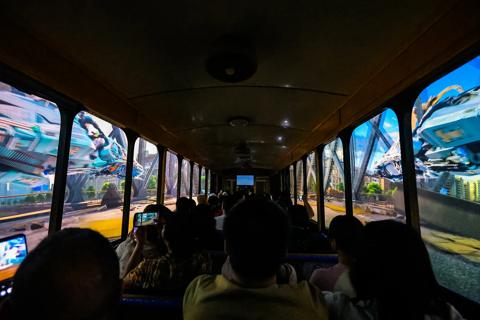
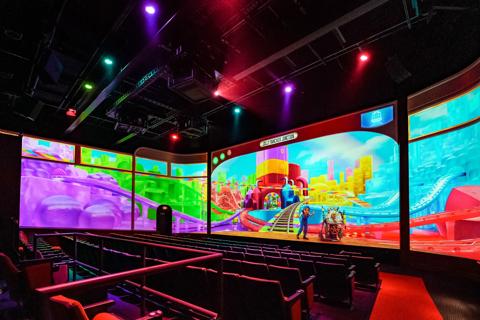
“Tram Ride” in Hengdian Dream Bund Film Experience Resort, features innovative designs that combine full-size trams, dynamic tracks, and massive curved projection screens, offering an immersive journey through time.
Designing for the digital native
This isn’t just a design trend. It’s a response to a generational shift. Gen Alpha, born after 2010, has grown up with smartphones, augmented reality filters, and AI-powered games. For them, interactivity isn’t a novelty; it’s a baseline. They expect personalization, responsiveness, and seamless integration with their digital lives.
Parks are responding with wearable tech, mobile apps, and interactive installations where guests co-create the narrative. In fact, 36% of our survey respondents said they’re investing in media-based attractions specifically to appeal to this tech-native generation. Flying theaters, 4D cinemas, and dark rides are evolving rapidly alongside interactive immersive spaces, which enable designers to build worlds that respond to the visitor’s choices, emotions, and presence.
As someone who’s worked closely with creative teams and technical partners, I can tell you: this is where the real innovation is happening.
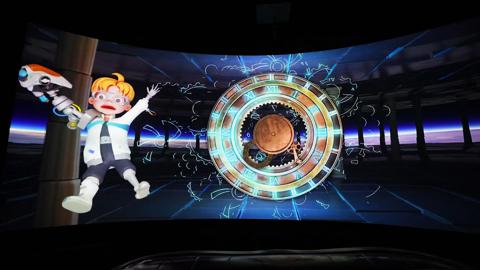
“The Time and Space Museum”, in WS Dream Park, is the first indoor dark ride in China to incorporate gesture and sound recognition technology. The ride takes it visitors on a journey through time where they encounter prehistoric creatures, mythological figures, and legendary artists in interactive adventures.
Immersion as a strategic imperative
Immersive experiences are more than a design choice; they’re a strategic lever. They drive longer dwell times, higher guest satisfaction, and increased revenue through premium ticketing and merchandise. They also offer a competitive edge in a crowded market.
Parks that deliver on this promise will not only attract Gen Alpha but also redefine what it means to be a destination.
What’s particularly interesting is how parks are using media-based attractions for flexibility, not just novelty. Nearly 29% of our survey respondents cited adaptability as a key reason to invest in these attractions. They allow for rapid (seasonal) content updates, thematic overlays, and targeted storytelling without rebuilding physical infrastructure. This adaptability keeps experiences fresh and supports repeat visitation and brand loyalty.
And behind the scenes, technology plays a critical role as an enabler. Projection systems, for example, are designed to be invisible yet powerful – flexible in setup, seamlessly blending into environments, and unlocking creative freedom for designers.
This combination of creativity and adaptability is what makes immersive experiences a smart way to future-proof the guest experience – not only in attractions, but throughout the entire destination, from themed hotels to hospitality spaces and retail areas. Immersion is everywhere, shaping how guests interact with every touchpoint of the park.
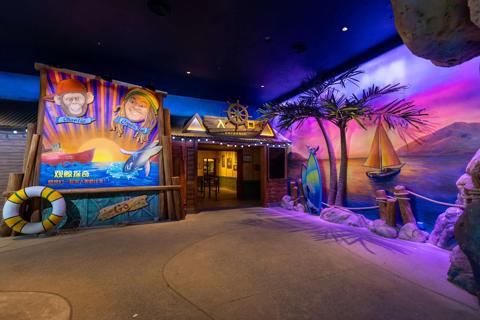
The Bermuda Storm! The 4D immersive experience invites thrill-seekers on a wild and exciting sea adventure. Barco technology proudly played a role in the creation of this standout attraction, but also powers engaging visuals in the queue area, setting the scene as soon as the visitors entered the attraction.
Creativity over technology
One of the most honest takeaways from our survey was this: the thrill of technology alone isn’t enough. Visitors are becoming more discerning. What captivates them is creativity, the ability to tell compelling stories, evoke emotion, and create memorable moments.
This is a critical insight for park designers and operators. Technology should never be the star of the show; it should be the enabler. The real magic lies in how it’s used to support storytelling, character development, and thematic immersion.
The most successful parks I’ve seen are those that blend media formats, such as projection, sound, lighting, and physical sets, into cohesive experiences. They use technology not to impress, but to express.
Final thoughts
The future of theme parks isn’t about bigger thrills or louder effects. It’s about deeper engagement. It’s about inviting guests into the story and giving them a role to play.
Immersion is no longer a luxury, it’s an expectation. And for parks that embrace this shift, the possibilities are limitless.
With the right technology partner, theme parks are not just building attractions; they’re building experiences that evolve, adapt, and inspire. Learn more about the Barco theme parks offerings here.

Published by Koen Van Belle
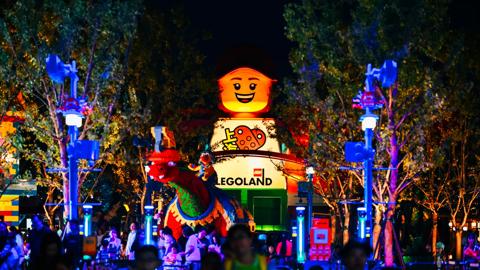
article · 5 min read · Dec 10, 2025
Thriving beyond the turnstile: the growth story of theme parks
The theme park industry is no longer defined by turnstiles and ticket stubs. It’s defined by journeys. Multi-day, multi-sensory, multi-dimensional journeys that reflect the values and aspirations of today’s visitors. And the rise of the resort is a creative opportunity to extend the magic beyond the park gates.
article · 5 min read · Nov 26, 2025
Operational excellence in a talent-strapped world: a theme park perspective
Theme parks are built on magic, but behind every magical moment is a complex web of technology and operations. And increasingly, that web is under pressure. But with thoughtful planning, smart technology choices, and a commitment to operational excellence, parks can adapt and thrive.
Published by Koen Van Belle
article · 5 min read · Dec 10, 2025
Thriving beyond the turnstile: the growth story of theme parks
The theme park industry is no longer defined by turnstiles and ticket stubs. It’s defined by journeys. Multi-day, multi-sensory, multi-dimensional journeys that reflect the values and aspirations of today’s visitors. And the rise of the resort is a creative opportunity to extend the magic beyond the park gates.
article · 5 min read · Nov 26, 2025
Operational excellence in a talent-strapped world: a theme park perspective
Theme parks are built on magic, but behind every magical moment is a complex web of technology and operations. And increasingly, that web is under pressure. But with thoughtful planning, smart technology choices, and a commitment to operational excellence, parks can adapt and thrive.
article · 5 min read · Jun 17, 2025
The future of museums through the lens of projection
Is projection still relevant in museums? Our short answer is a resounding “YES”. And it is nice to see that the museum community seems to agree. Discover more about the benefits that make projection the go-to choice for storytelling in exhibitions.